
张楠:空间叙事与视觉自省

“ 张楠以油画与数字绘画并行创作,借身边人事物为载体,审视当代人身份模糊、表里不一的生存困境,以旁观者的视角,将现实喧嚣提纯为精神观照,折射当代个体的焦虑与挣扎,构建出兼具哲学深度与社会反思的艺术表达。”
张楠:空间叙事与视觉自省
文/段文亮
张楠的艺术创作以油画与数字绘画为两条并行路径,二者同步展开,数字绘画虽起步稍晚,却迅速构成其艺术实践的重要组成。我曾邀请他的数字绘画作品参加我的多次展览,并且2025年初,我们也合作了一场数字绘画的个展。根据三年的了解,我觉得目前可以写一写关于他作品的理解分析与解读。
首先,我不再对于“数字媒介是否属于艺术” 这一问题进行阐释,早在十五年前,大卫霍克尼和村上隆的成功早已证实这一绘画材质的市场化和“合法化”。这篇文章也仅围绕着张楠绘画作品进行解读。
张楠的专业背景为舞台美术,并未接受传统美术学院体系化的造型训练。这一非典型的学艺路径,使其创作摆脱了学院教育的既定范式,呈现出鲜明的设计意识与空间建构特征。传统绘画构图多以二维平面为基础,追求画面内部的视觉均衡与形式秩序;而舞台设计则以三维空间为核心,强调场景的纵深感、层次关系与场域结构,追求完整的“空间叙事”。通过前景、中景、背景的有序组织,构建具有叙事功能的立体空间,引导观者视线,传递内在逻辑与情感线索。这种独特的空间思维,使张楠突破了传统平面绘画的视觉边界,将剧场式空间逻辑系统性地融入绘画创作之中。
©《生活必要性》 张楠 数字绘画 尺寸可变 2024
©《生活必要性》 张楠 数字绘画 尺寸可变 2025
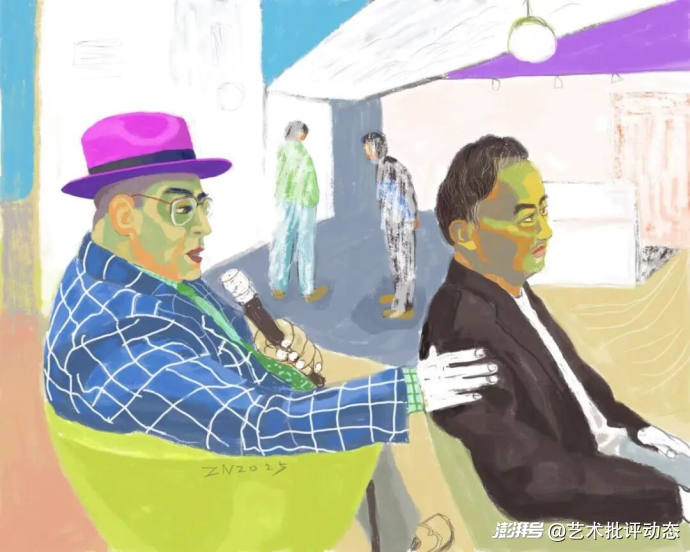
在色彩表现上,张楠同样深受舞台美术的影响。其作品中的人物与静物,常以非生活中的色调作为情绪载体,在这里出现的光与色,是根据人物的情绪而设定的,随着情节的变化,一个静坐沉思的人物,一段复杂难言的心理活动,往往通过一种高度概括的色调得以呈现,使形象的内在世界被赋予清晰而饱满的精神指向。
©《生活必要性》 张楠 数字绘画 尺寸可变 2025
从创作脉络来看,张楠早期油画多以风景写生为主,侧重于对外部自然的观察与再现,对人的关注相对有限。随着阅历与认知的深化,其创作逐渐弱化对现实表象的直接摹写与技巧化展示,转向对个体内在感受、情绪状态与精神体验的表达,甚至在创作中形成对现实场景的自觉疏离。画面语言随之趋于简化、概括与平面化,视觉结构更加凝练,呈现出由外在再现走向内在表达的清晰转向。在现代性语境下,个体普遍处于焦虑、浮躁与无力的精神状态之中,张楠的绘画,正是对当代人普遍生存境遇的视觉回应。
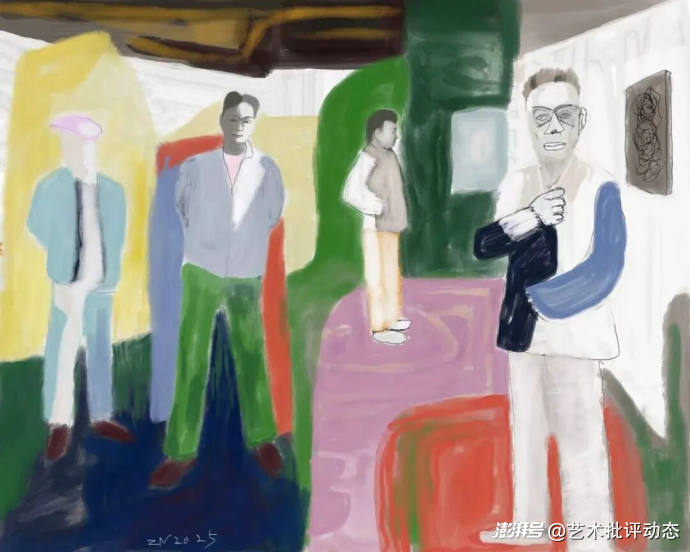
©《生活必要性》 张楠 数字绘画 尺寸可变 2025
张楠的数字绘画,并非以探寻世界的本源、目的与因果关系为出发点,而是立足于主体感知优先的认知立场。他的绘画是对日常现实的忠实转译,是对身边人与物的状态、关系与情绪的精准捕捉,作品以克制而真诚的语言,记录生活的回声与镜像,成为当代社会个体精神状态的视觉文本。舞台美术的专业基因,使其创作天然带有强烈的剧场性。他习惯于在三维空间结构中浓缩人生的悲欢离合,在有限的视觉场域内完成叙事整合与情感呈现,在短时间内凝聚人的一生与多重事件。这种专业惯性,使其不自觉地以旁观者视角,将现实生活视作一幕持续上演的舞台剧,以疏离而冷静的目光审视人际关系、日常冲突与生命状态,从而获得超越日常经验的理解维度。
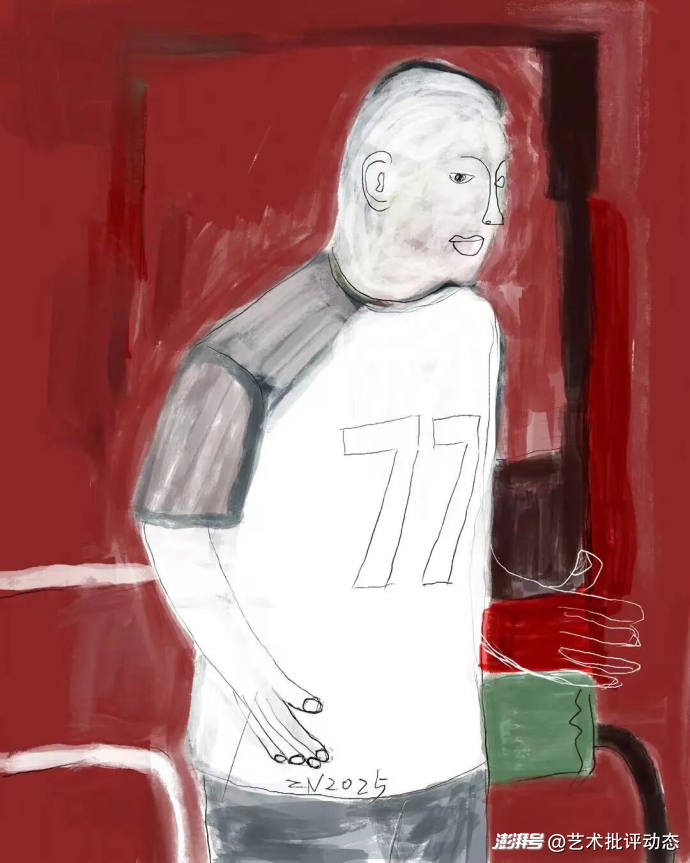
张楠的创作题材均来自真实生活现场,描绘对象多为亲友、同事与身边个体,取材朴素日常,却在平凡空间中呈现出深刻的当代性。张楠彻底抛弃传统绘画中的明暗交界线、中间色调与三维空间幻觉,转而使用清晰、肯定、连续不断的轮廓线界定人物形体。复杂的肌肉起伏、骨骼结构、皮肤质感被高度概括为简洁的块面与曲线,人物面部不再追求精准五官与细腻表情,肢体姿态强调原始、自然、充满生命力的动态。张楠作品之中的人物不再是现实中的人,而是服务于画面形式的视觉元素,为色彩的独立表达提供空间。
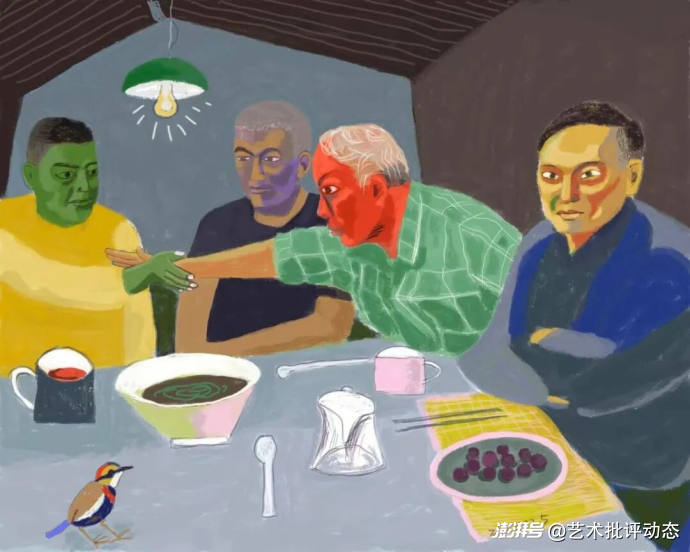
©《生活必要性-聚餐》 张楠 数字绘画 尺寸可变 2025
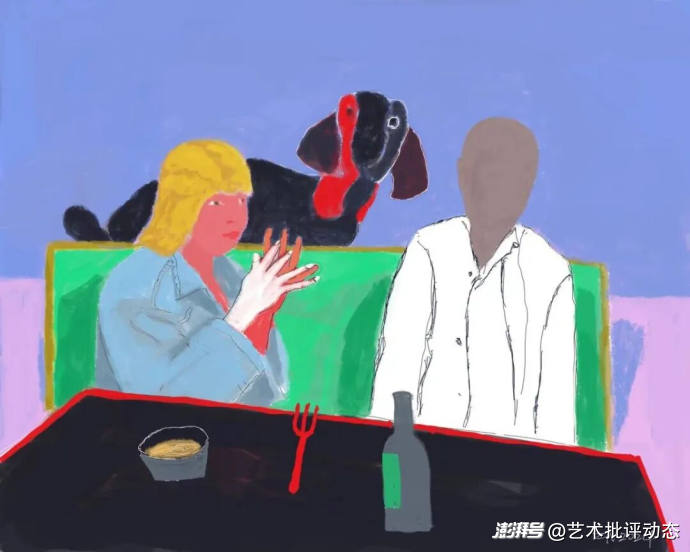
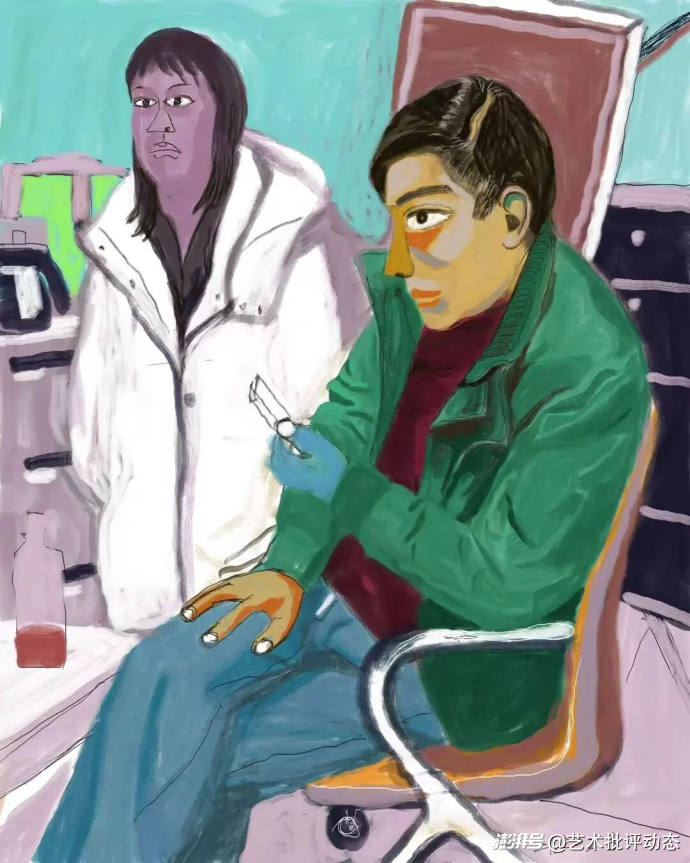
《聚餐》这件作品颜色画面中,人物面部被大红、土黄、墨绿等非自然色块随意分割,没有遵循现实肤色逻辑,衣饰与背景色彩强度对比区分,色块平涂、边界明确,人物造型端正稳定,与高饱和的色彩形成巧妙张力,人物造型从“写实再现”转向“形式载体”,色彩从“附属工具”转向“表现主体”。
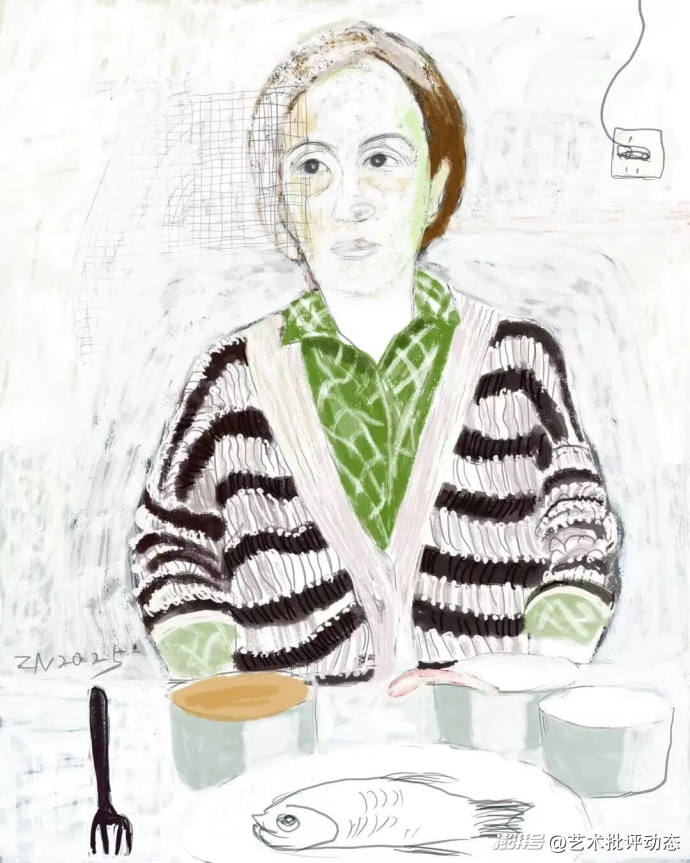
©《生活必要性-餐桌女人》 张楠 数字绘画 尺寸可变 2025
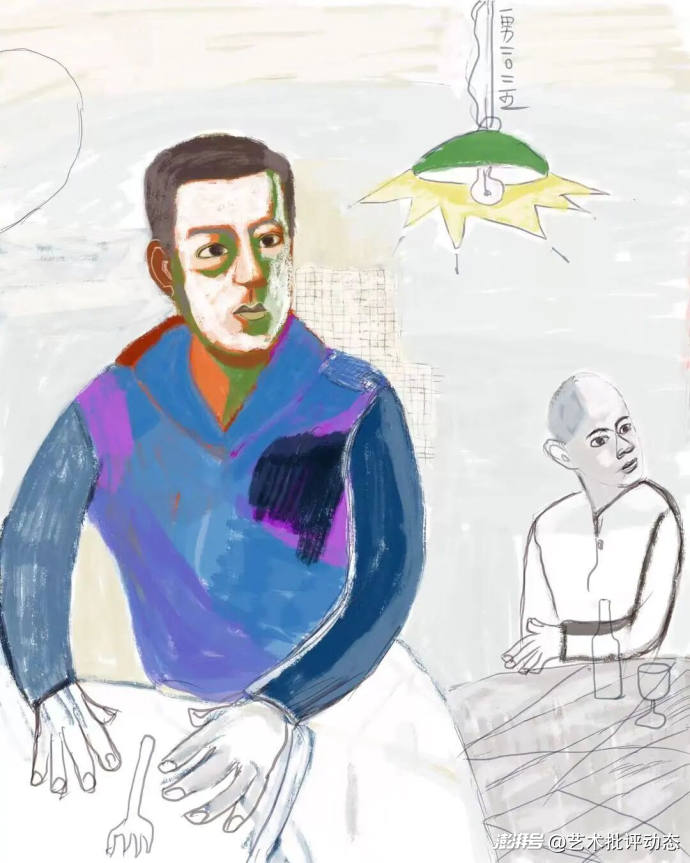
在《餐桌女人》中,整面墙壁、桌面、人物面部颜色统一为白色,完全违背现实空间逻辑,却营造出理性、安定、统一的视觉氛围,人物简化推向极致,仅以流畅夸张的曲线勾勒出传神动态。张楠的色彩一直都不是“看到的颜色”,而是“感受到的颜色”。
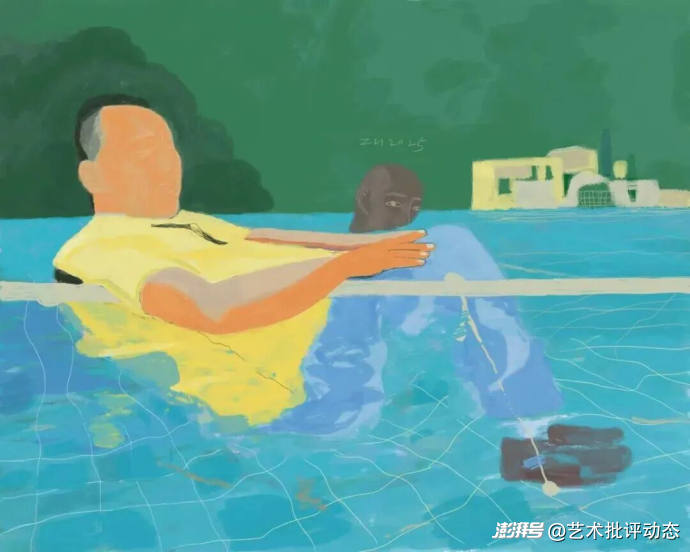
©《生活必要性》 张楠 数字绘画 尺寸可变 2025
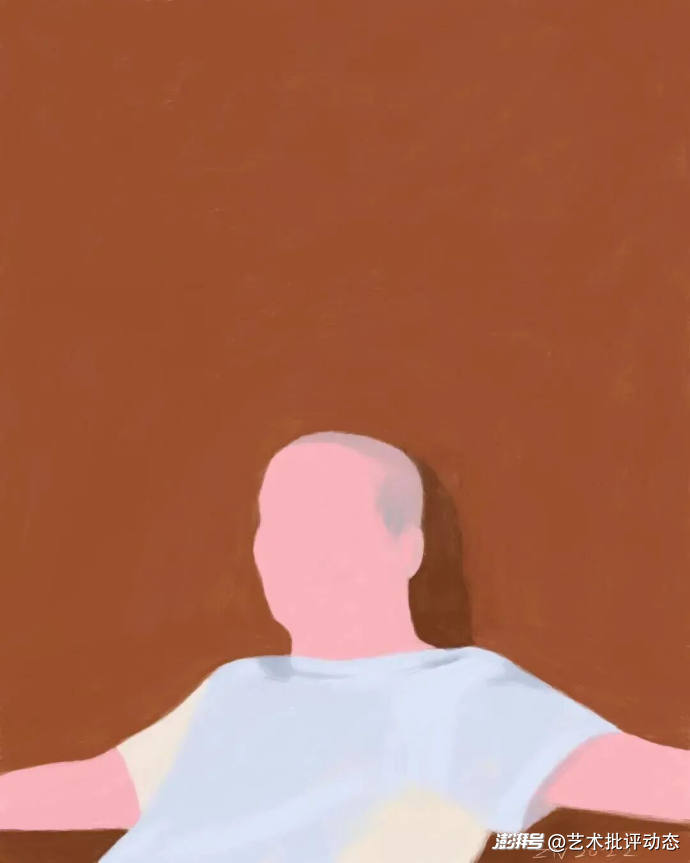
在《生活的多样性》系列之中,曾有一个“空白”系列,这个系列作品中的诸多人物形象与自画像,均刻意弱化乃至省略五官,这一处理并非形式游戏,而是具有明确的观念指向:意在揭示人的外在面相与内在心境之间的错位与反差,提示个体在社会场景中呈现的面貌,往往与其真实内心并不完全一致。人物形象的“无五官化”,成为对现代人身份模糊、情绪多重、表里不一的生存状态的视觉隐喻。
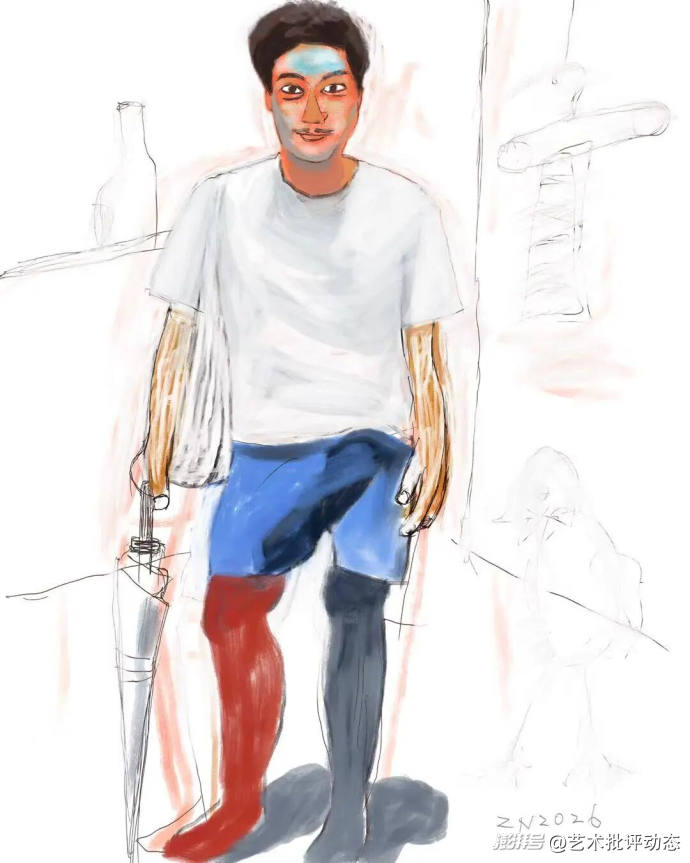
©《生活必要性》 张楠 数字绘画 尺寸可变 2026
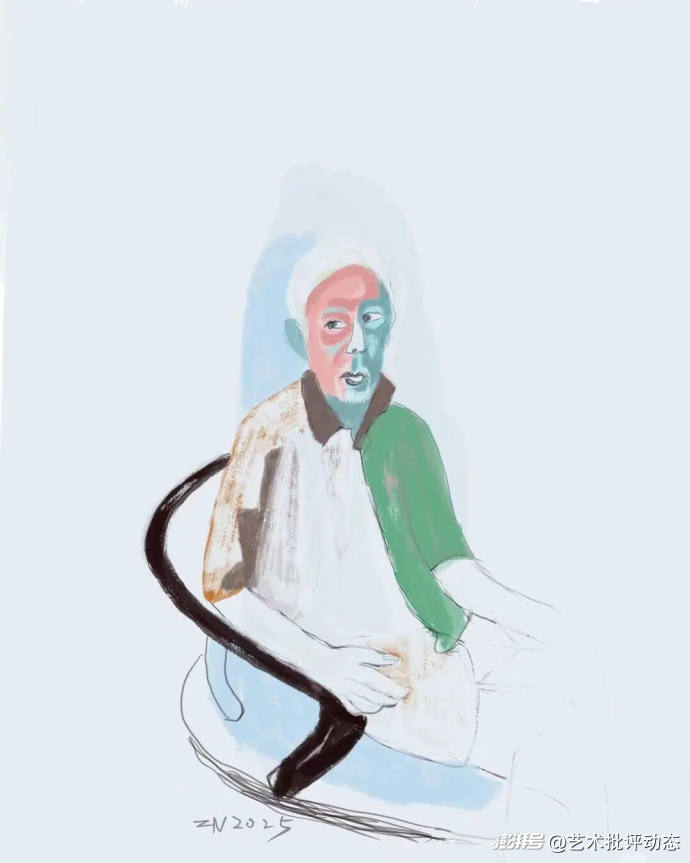
©《生活必要性》 张楠 数字绘画 尺寸可变 2025
在现实世界中,人类必须直面生存的困境、挣扎与有限性,不可避免地经历苦难、冲突与生命的消逝。而绘画所构建的精神世界,则是一种理性、自省、静观式的存在,它是现实生活的无声投射,是经验世界的提纯与反思。在绘画的视觉场域中,现实的喧嚣被过滤、褪色、陌生化,从而进入一种沉静的观照状态。
在创作的瞬间,张楠完成了从生活参与者到精神旁观者的身份转换:从人生舞台退至观众席,以冷静、抽离、理性的目光凝视生命图景,即便面对生死议题,也保持着审视的距离。而当他重返现实生活,又以完整的主体身份投入其中,继续经历、感受、行动与共情。
正是在介入与抽离、剧场与画布、现实与精神的往复之间,张楠构建了自洽而独特的艺术体系:以空间为结构,以单色为情绪,以旁观为视角,以无五官的人物为隐喻,形成了兼具媒介实验性、剧场空间感与哲学深度的个人艺术面貌。
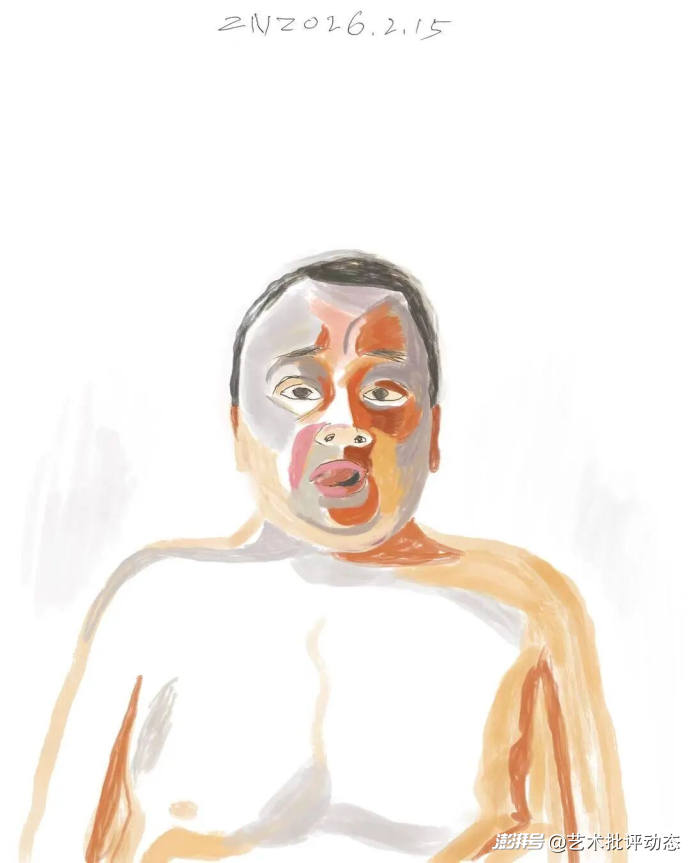
©《生活必要性》 张楠 数字绘画 尺寸可变 2026
Zhang Nan: Between Theater and Canvas
By Duan Wenliang
Zhang Nan’s artistic practice unfolds along two parallel paths: oil painting and digital painting. Although digital painting began relatively late, it has rapidly become a vital component of his artistic output. I have invited his digital works to participate in numerous exhibitions I curated, and in early 2025, we also collaborated on a solo exhibition dedicated to his digital paintings. Based on three years of close observation, I believe it is now appropriate to present an analysis and interpretation of his oeuvre.
First, I will not elaborate on the question of “whether digital media qualify as art.” Fifteen years ago, the successes of David Hockney and Takashi Murakami had already confirmed the market legitimacy and artistic “legitimization” of this medium. This text focuses solely on the interpretation of Zhang Nan’s paintings.
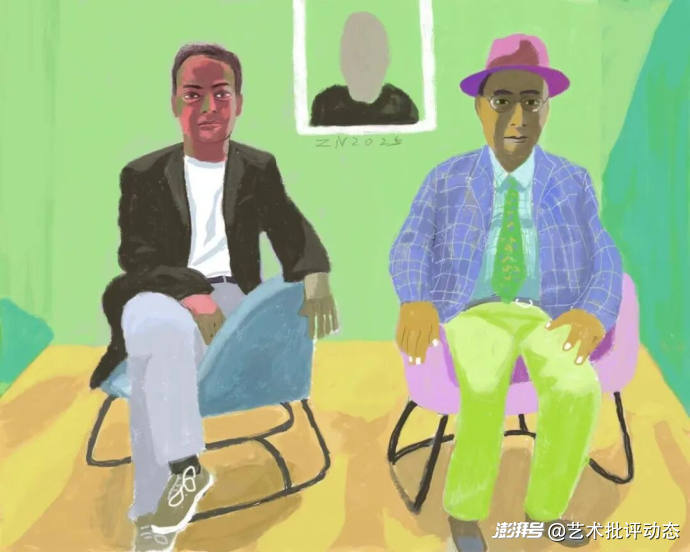
©《Necessities of Life》 Zhang Nan Digital Painting Variable Dimensions 2025
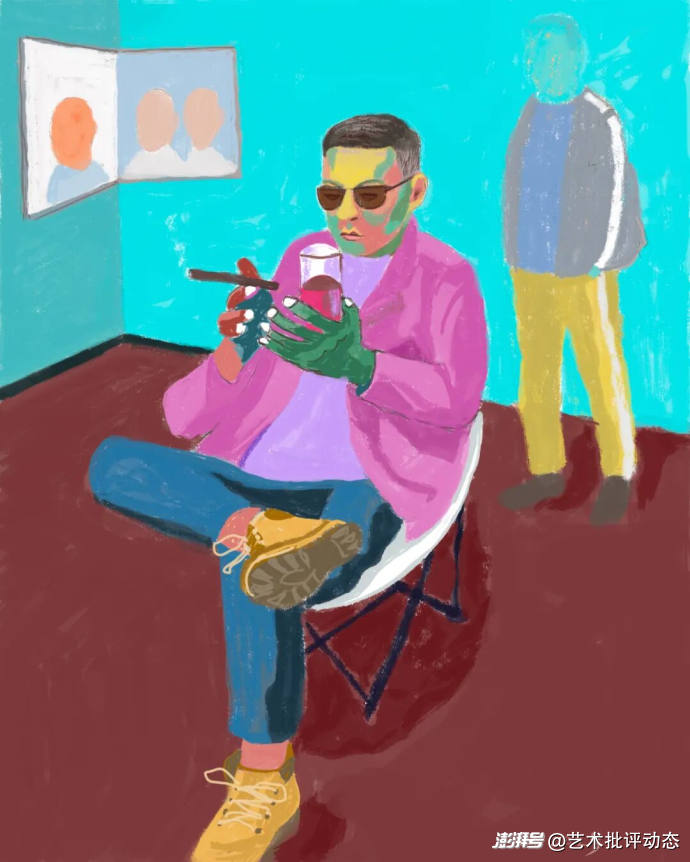
©《Necessities of Life》 Zhang Nan Digital Painting Variable Dimensions 2025
Zhang Nan’s professional background is in stage design, and he did not receive systematic academic training in traditional fine art academies. This atypical educational path freed his creation from the established paradigms of academy education, imbuing his work with a distinct sense of design consciousness and spatial construction. Traditional painting is largely based on the two-dimensional plane, pursuing visual balance and formal order within the composition. Stage design, by contrast, centers on three-dimensional space, emphasizing depth, layering, field structure, and a coherent spatial narration. Through the ordered arrangement of foreground, middle ground, and background, he constructs a narrative three-dimensional space that guides the viewer’s gaze and conveys internal logic and emotional clues. This unique spatial thinking allows Zhang Nan to transcend the visual boundaries of traditional flat painting, systematically integrating theatrical spatial logic into his artistic practice.
In terms of color expression, Zhang Nan is equally influenced by his stage design background. The figures and still lifes in his works often employ unrealistic color tones as emotional carriers. The light and color in his paintings are set according to the characters’ inner moods. A figure sitting in contemplation, a complex and ineffable psychological state, is often rendered through a highly condensed color scheme, endowing the inner world of the image with clear and profound spiritual direction.
In terms of his creative trajectory, Zhang Nan’s early oil paintings focused primarily on landscape sketching, emphasizing the observation and representation of external nature, with relatively limited attention to the human figure. As his experience and cognition deepened, his creation gradually weakened direct mimesis of realistic appearances and technical display, shifting toward the expression of individual inner feelings, emotional states, and spiritual experiences, and even cultivating a conscious detachment from realistic scenes. His visual language became simplified, generalized, and planar, with a more condensed formal structure, marking a clear shift from external representation to internal expression. Within the context of modernity, where individuals commonly experience anxiety, restlessness, and powerlessness, Zhang Nan’s paintings constitute a visual response to the universal existential condition of contemporary people.
Zhang Nan’s digital painting does not start from an inquiry into the origin, purpose, or causality of the world, but from a cognitive stance that prioritizes subjective perception. His paintings are a faithful translation of daily reality, a precise capture of the conditions, relationships, and emotions of the people and objects around him. With restrained and sincere language, his works record echoes and reflections of life, becoming visual texts of the individual spiritual state in contemporary society. The professional gene of stage design naturally endows his creation with strong theatricality. He is accustomed to condensing the joys and sorrows of life within a three-dimensional spatial structure, completing narrative integration and emotional presentation within a limited visual field, and concentrating a lifetime and multiple events into a brief moment. This professional inclination leads him to unconsciously adopt a spectator’s perspective, regarding real life as an ongoing stage play. With a detached and calm gaze, he examines interpersonal relationships, daily conflicts, and the human condition, thereby attaining a dimension of understanding beyond ordinary experience.
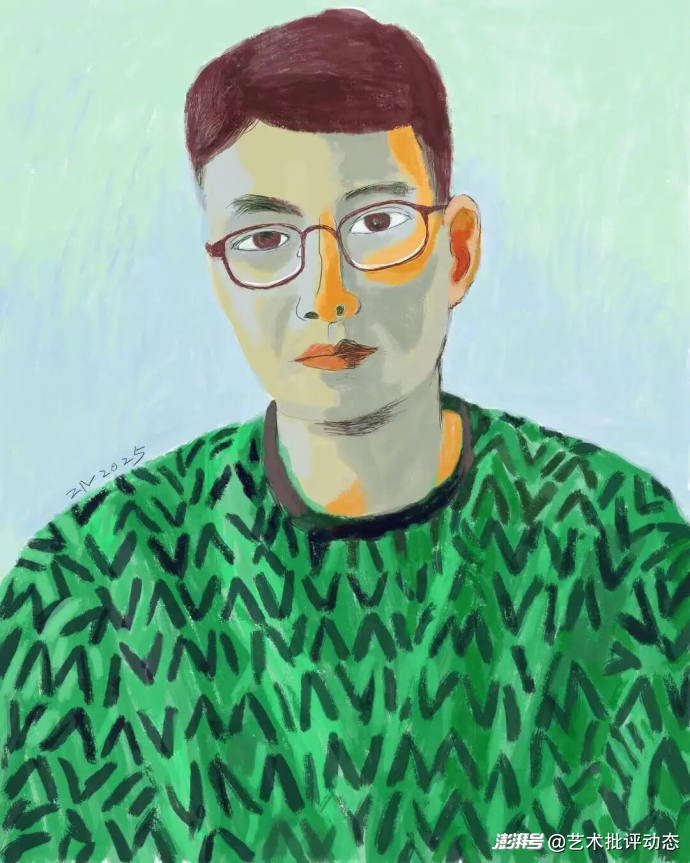
©《Necessities of Life》 Zhang Nan Digital Painting Variable Dimensions 2025
Zhang Nan’s subject matter is drawn entirely from real-life scenes; his subjects are mostly relatives, friends, colleagues, and people around him. Though rooted in the ordinary, his work reveals profound contemporaneity within mundane spaces. He completely abandons the chiaroscuro, mid-tones, and three-dimensional spatial illusions of traditional painting, instead using clear, definite, and continuous contour lines to define the human form. Complex muscular undulations, bone structures, and skin textures are highly condensed into concise planes and curves. Facial features are no longer rendered with precise detail or delicate expressions; bodily gestures emphasize primal, natural, and vital dynamism. The figures in Zhang Nan’s works are no longer literal representations of people, but visual elements serving the formal structure of the painting, leaving room for color to function as an independent expressive force.
In the painting The Dinner, figures’ faces are divided by arbitrary non-natural color blocks—bright red, earthy yellow, dark green—disregarding realistic skin tones. Clothing and background are distinguished by intense color contrasts; flat color blocks with sharp boundaries combine with stable, upright figure compositions to create a subtle tension with highly saturated hues. The figure transforms from “realistic representation” into a formal carrier, and color shifts from a “subsidiary tool” to the expressive subject.
In Woman at the Table, the entire wall, tabletop, and the figure’s face are unified in white, completely defying the logic of real space, yet creating a rational, calm, and unified visual atmosphere. Figure simplification is pushed to an extreme; vivid movements are outlined only through fluid and exaggerated curves. For Zhang Nan, color is never “the color seen,” but “the color felt.”
©《Necessities of Life》 Zhang Nan Digital Painting Variable Dimensions 2026
Within his series The Diversity of Life, there is a “Blank” subgroup. In these works, many figures and self-portraits deliberately weaken or even omit facial features. This treatment is not a formal game, but carries a clear conceptual intention: to reveal the dislocation and contrast between one’s external appearance and inner state, suggesting that the face individuals present in social situations often does not fully align with their true feelings. The featureless figures serve as a visual metaphor for the modern condition—ambiguousentity, conflicting emotions, and the gap between outward performance and inner truth.
In the real world, humans must confront the predicaments, struggles, and finitude of existence, inevitably enduring suffering, conflict, and the impermanence of life. The spiritual world constructed by painting, however, is one of rationality, introspection, and contemplation—a silent projection of real life, a refinement and reflection of the empirical world. Within the visual field of painting, the noise of reality is filtered, faded, and defamiliarized, allowing entry into a state of quiet observation.
©《Necessities of Life》 Zhang Nan Digital Painting Variable Dimensions 2025
In the moment of creation, Zhang Nan completes anentity transformation: from participant in life to spectator of the spirit. Stepping from the stage of life into the audience, he gazes at the panorama of human existence with calmness, detachment, and rationality, maintaining critical distance even when confronting themes of life and death. When he returns to reality, he re-engages as a complete subject, continuing to experience, feel, act, and empathize.
It is in the oscillation between engagement and detachment, theater and canvas, reality and spirit that Zhang Nan has constructed a coherent and unique artistic system: structured by space, driven by color as emotion, guided by a spectator’s perspective, and metaphorized through featureless figures. He has forged a personal artistic language characterized by media experimentation, theatrical spatiality, and philosophical depth.
艺术家/ARTIET
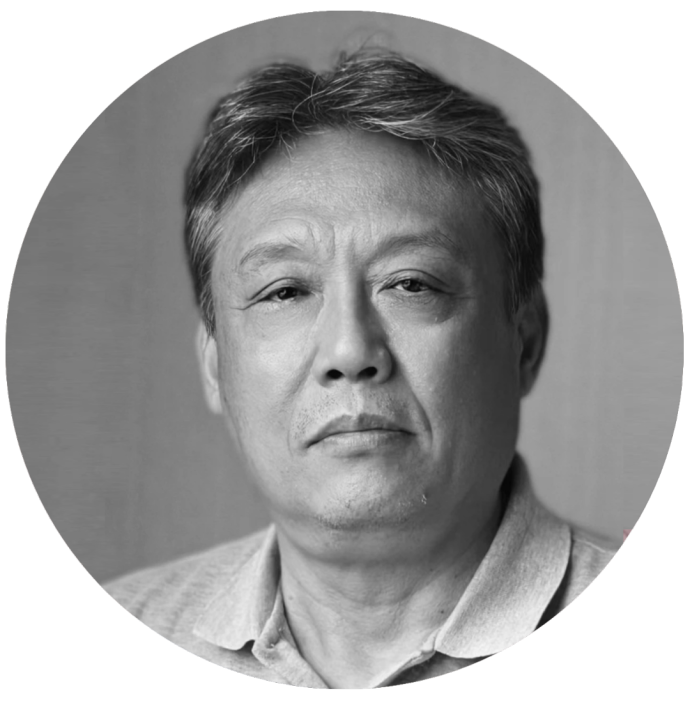
张楠/ZHANG NAN
张楠/ZHANG NAN
张楠,陕西西安人,国家一级舞台美术设计师;北京中国当代写意油画研究院特约画家;陕西省写意油画研究会会长
撰稿人/AUTHOR
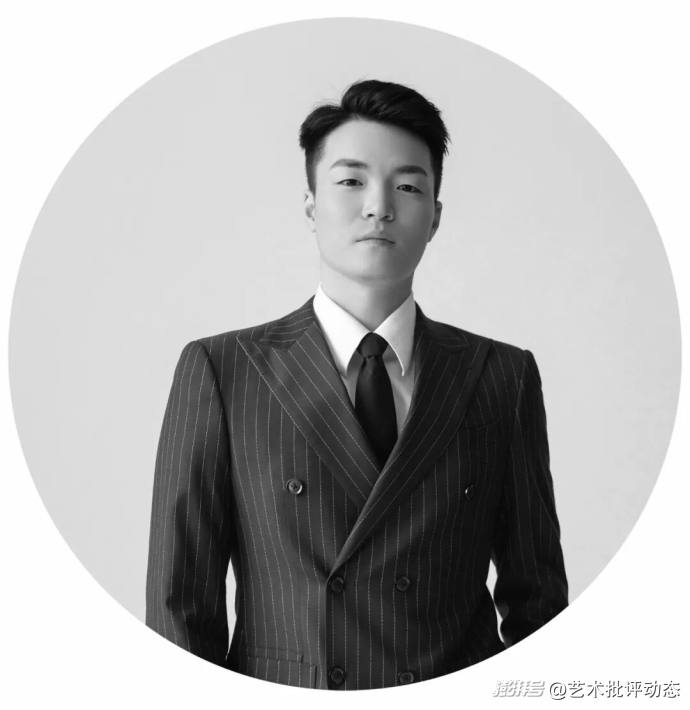
段文亮/DUAN WENLIANG
段文亮,1993年出生于陕西岐山,当代艺术家、美学研究者、策展人。长期关注现当代艺术研究,探索艺术家、策展、创作之间统一的一致可能性。曾先后担任中国多家美术馆馆长;旦夕间、青年艺术家推荐展、西安艺术输出计划项目发起人;现任陕西省写意油画研究会副会长、陕西省国际文学与艺术促进会理事;陕西省美术家协会委员,陕西省美协策展委员会委员。曾在2019年发起了旦夕间、青年艺术家推荐展、西安艺术输出计划、正在发生时等艺术项目,先后策划举办《24小时|国际当代艺术展》《长安画坛水墨双年展》《百米计划|青年艺术家推荐展系列展》《正在发生|西安当代艺术系列展》《首届西安潮流艺术大展》等百余场展览。现常驻中国西安。