
《茶叶科学》| 2021年第4期要文概览

原创 《茶叶科学》 中国茶叶学会 收录于话题#《茶叶科学》要文概览20个
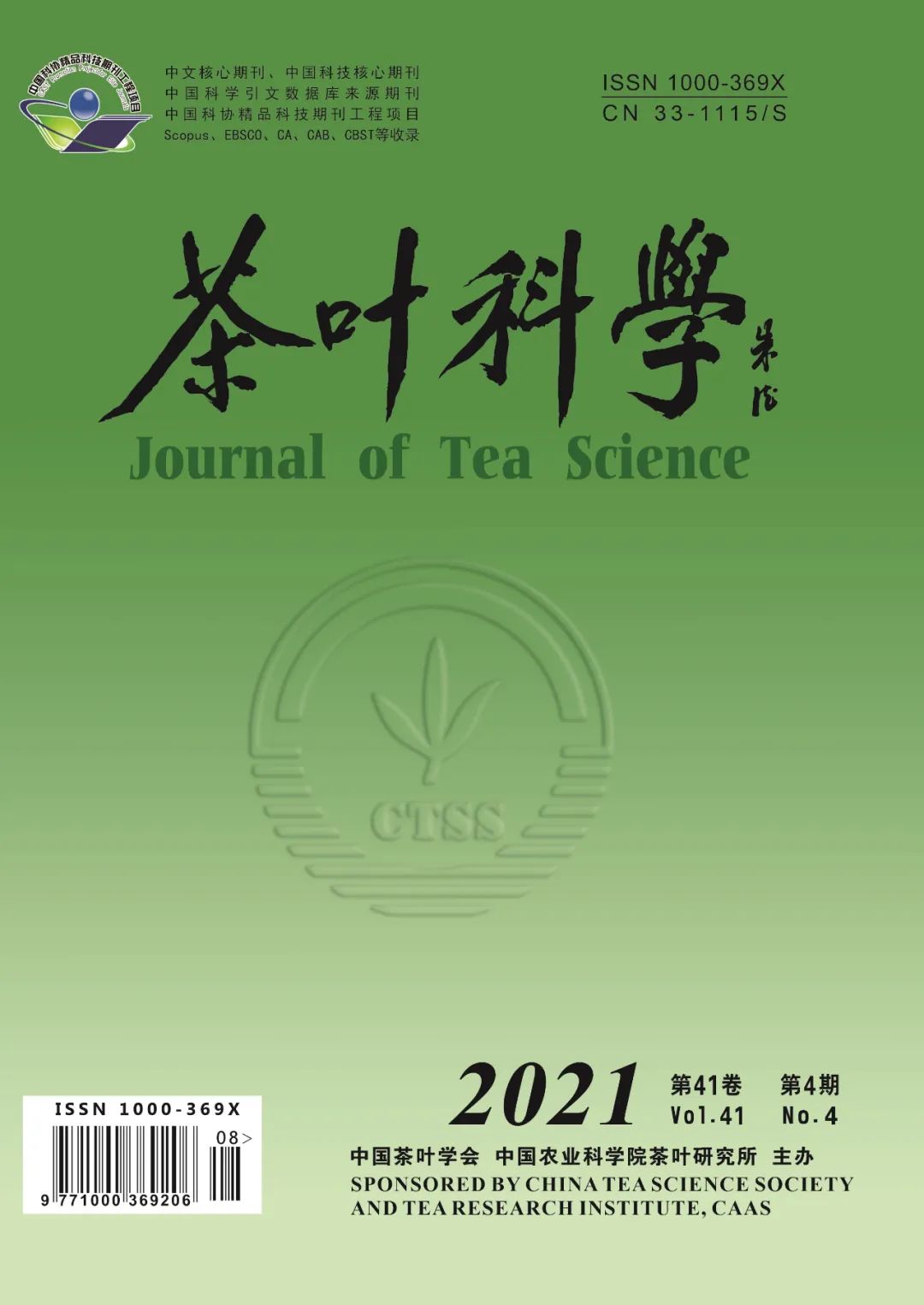 《茶叶科学》(Chaye Kexue)
(双月刊,1964年创刊)
《茶叶科学》(英文刊名:Journal of Tea Science)于1964年8月经中宣部批准创刊,刊名系朱德委员长题字,1966年文革期间停刊,经国家科委批准1984年8月复刊,中国工程院院士陈宗懋研究员担任编委会主任,中国工程院院士刘仲华教授等专家担任编委会副主任,是茶学界唯一被中国科学引文数据收录为核心区的中文核心期刊。
2021, Vol. 41, No.4
主管:中国科学技术协会
主办:中国茶叶学会、中国农业科学院茶叶研究所
出版:《茶叶科学》编辑部
茶组植物的分类历史与思考
杨世雄
摘要:茶组植物是重要的经济植物,也是山茶属内分类学问题最多的类群,由于形态性状的多样性和连续性,其组的分类学范围和物种的界定均存在不少的争议。系统地回顾了茶组植物分类的历史,并基于植物分类学者的立场,对造成茶组植物分类学混乱的原因及如何改进,提出了自己的观点。
关键词:山茶属;茶组;分类学
参考引用:杨世雄. 茶组植物的分类历史与思考[J]. 茶叶科学, 2021, 41(4): 439-453. doi: 10.13305/j.cnki.jts.2021.04.001.
原文地址:http://www.tea-science.com/CN/Y2021/V41/I4/439
Thinking on the Taxonomy of Camellia sect. Thea
YANG Shixiong
Abstract:Camellia sect. Thea, a group of high economic value, is extremely complicated in taxonomy because of the diversity and the continuity of interspecies morphological characters. There exist lots of controversies of current classification systems about sectional taxonomic circumscription and species definition. Here the taxonomic history of Sect. Thea was systematically reviewed. Some taxonomists’ views on the causes of the taxonomic confusion and how to improve the taxonomy were also presented.
Keywords:Camellia, Sect. Thea, Taxonomy
Cite this Article:YANG Shixiong. Thinking on the Taxonomy of Camellia sect. Thea[J]. Journal of Tea Science, 2021, 41(4): 439-453. doi: 10.13305/j.cnki.jts.2021.04.001.
野生和栽培大理茶居群的遗传多样性与群体结构
毛娟,江鸿键,杨如兵,李崇兴,马成英,陈亮,马建强
摘要:大理茶是栽培型茶树的野生近缘种,了解大理茶居群的遗传多样性和群体结构,对于大理茶资源的有效保护和开发利用至关重要。利用30对茶树核心SSR引物,对3个代表性的野生和栽培大理茶居群进行遗传分析。结果表明,30对SSR引物在所有大理茶样本中都能扩增出特异性产物,每个位点检测到的等位基因数为2~14个,PIC范围为0.041~0.877,平均0.491。3个大理茶居群具有中等水平的遗传多样性,其中大雪山(DXS)野生居群的遗传多样性相对较低。香竹菁(XZQ)和白莺山(BYS)栽培居群的近交水平很高,近交系数(Fis)分别为0.728和0.913。居群配对分析显示,居群间遗传分化指数(Fst)均小于0.15,基因流(Nm)大于1。分子方差分析表明3个大理茶居群的遗传差异主要来源于居群内(94.1%)。聚类分析显示,野生和栽培大理茶单株的遗传距离相对较大。基于PCoA和Structure的群体结构分析显示,野生居群的遗传背景单一,栽培居群的遗传背景较复杂,其中7个BYS栽培居群单株可能是大理茶和阿萨姆茶通过渐渗杂交形成。
关键词:大理茶;SSR;遗传多样性;群体结构
参考引用:毛娟, 江鸿键, 杨如兵, 李崇兴, 马成英, 陈亮, 马建强. 野生和栽培大理茶居群的遗传多样性与群体结构[J]. 茶叶科学, 2021, 41(4): 454-462. doi: 10.13305/j.cnki.jts.2021.04.002.
原文地址:http://www.tea-science.com/CN/Y2021/V41/I4/454
Genetic Diversity and Population Structure of Wild and Cultivated Camellia taliensis Populations
MAO Juan, JIANG Hongjian, YANG Rubing, LI Chongxing, MA Chengying, CHEN Liang, MA Jianqiang
Abstract: Camellia taliensis is a wild relative of tea plants (C. sinensis). Understanding of the genetic diversity and population structure of Camellia taliensis is important and helpful for protecting and utilizing these germplasm resources. In this study, a set of 30 core SSR markers derived from tea plants were used for genetic analysis of three representative wild and cultivated C. taliensis populations. The results show that all SSR markers successfully yielded specific amplification, with a range of polymorphic alleles from 2 to 14. The PIC value was between 0.041 and 0.877, with an average of 0.491. The three C. taliensis populations showed moderate levels of genetic diversity, and it was relatively lower for the Daxueshan (DXS) wild population. The inbreeding coefficient (Fis) of Xiangzhuqing (XZQ) and Baiyingshan (BYS) cultivated populations were 0.728 and 0.913 respectively, which meant high levels of inbreeding. Pairwise comparisons of the genetic differentiation index of three populations were low (Fst<0.15), while the rates of gene flow were high (Nm>1). The results of AMOVA exhibite that 94.1% of the genetic variation was within population. The genetic distances of wild and cultivated C. taliensis individuals were relatively higher. The genetic background of wild population was similar, while it was complex for cultivated populations. Seven individuals of BYS population were possibly originated from hybridization and introgression between C. taliensis and C. sinensis var. assamica.
Keywords:Camellia taliensis, SSR, genetic diversity, population structure
Cite this Article:MAO Juan, JIANG Hongjian, YANG Rubing, LI Chongxing, MA Chengying, CHEN Liang, MA Jianqiang. Genetic Diversity and Population Structure of Wild and Cultivated Camellia taliensis Populations[J]. Journal of Tea Science, 2021, 41(4): 454-462. doi: 10.13305/j.cnki.jts.2021.04.002.
云南大叶种茶树籽油的特征指标与脂肪酸组成研究
吴万富,吕世懂,杨学芳,李悦,张继光
摘要:采用化学滴定及气相色谱等手段,对产自云南普洱的5个大叶种茶树籽油及8个常见食用植物油的特征指标(折光指数、相对密度、碘值、皂化值)和脂肪酸组成进行了对比研究。结果表明,5个大叶种茶树籽油折光指数为1.4629~1.4634;相对密度为0.9148~0.9167;碘值为859~903g·kg-1;皂化值为189.0~193.2g·kg-1;棕榈酸含量为14.29%~15.75%;油酸含量为57.83%~61.41%;亚油酸含量为18.81%~23.11%;饱和脂肪酸含量为17.6%~19.8%;不饱和脂肪酸含量为80.2%~82.4%。大叶种茶树籽油的脂肪酸组成与油茶籽油、橄榄油较为接近,饱和脂肪酸、单不饱和脂肪酸、多不饱和脂肪酸的比例接近1∶3∶1,脂肪酸的组成比例较为均衡,极具研发及推广价值。
关键词:大叶种茶树籽油;气相色谱;特征指标;脂肪酸组成
参考引用:吴万富, 吕世懂, 杨学芳, 李悦, 张继光. 云南大叶种茶树籽油的特征指标与脂肪酸组成研究[J]. 茶叶科学, 2021, 41(4): 463-470. doi: 10.13305/j.cnki.jts.20210622.001.
原文地址:http://www.tea-science.com/CN/Y2021/V41/I4/463
Study of Characteristic Indexes and Fatty Acid Composition in Big-leaf Tea Plant (Camellia sinensis var. assamica) Seed Oils from Yunnan Province
WU Wanfu, LYU Shidong, YANG Xuefang, LI Yue, ZHANG Jiguang
Abstract:The characteristic parameters (refractive index, relative density, iodine value, saponification value) and fatty acid composition in five big-leaf tea plant (Camellia sinensis var. assamica) seed oils from Yunnan Province and other eight common edible vegetable oils were analyzed by chemical titration and gas chromatography (GC). The results show that the refractive index of the five big-leaf tea plant (Camellia sinensis var. assamica) seed oils ranged from 1.462 9-1.463 4. The relative density ranged from 0.914 8~0.916 7, iodine value was 859-903 g·kg-1, saponification value was 189.0-193.2 g·kg-1 palmitic acid contents were 14.29%-15.75%, oleic acid contents were 57.83%-61.41%, linoleic acid contents were 18.81%-23.11%. The saturated fatty acid contents ranged from 17.6% to 19.8%. Unsaturated fatty acid contents were 80.2%-82.4%. Overall, the fatty acid composition of big-leaf tea plant (Camellia sinensis var. assamica) seed oil was similar as the Camellia oleifera seed oil and olive oil. The ratio of saturated fatty acid, monounsaturated fatty acid and polyunsaturated fatty acid was about 1∶3∶1. Big-leaf tea plant (Camellia sinensis var. assamica) seed oil has the potential value for research, development and promotion.
Keywords:big-leaf tea plant seed oil, gas chromatography, characteristic indexs, fatty acid composition
Cite this Article:WU Wanfu, LYU Shidong, YANG Xuefang, LI Yue, ZHANG Jiguang. Study of Characteristic Indexes and Fatty Acid Composition in Big-leaf Tea Plant (Camellia sinensis var. assamica) Seed Oils from Yunnan Province[J]. Journal of Tea Science, 2021, 41(4): 463-470. doi: 10.13305/j.cnki.jts.20210622.001.
白茶萎凋过程中氨基酸类物质代谢分析
陈佳佳,朱陈松,朱文伟,商虎,林琳,罗玉琴,孙威江
摘要:为研究白茶萎凋过程中氨基酸的变化,采用广泛靶向代谢组学及蛋白组学对0、12h和30h萎凋叶中氨基酸及相关酶进行检测。结果显示,游离氨基酸总量在萎凋前后无显著差异,萎凋前期(0~12h)丝氨酸、亮氨酸、苯丙氨酸、赖氨酸、酪氨酸、组氨酸、异亮氨酸、脯氨酸、缬氨酸、苯丙氨酸、γ-氨基丁酸(GABA)含量上升,N-乙酰-L-谷氨酸、还原型谷胱甘肽、N-α-乙酰-L-精氨酸下降,萎凋后期(12~30h)谷氨酸及乙酰甘氨酸含量减少;萎凋过程中蛋白质趋于降解,氨基酸合成途径相关的酶在萎凋前期(0~12h)下调表达,氨基酸降解相关的酶在萎凋后期(12~30h)上调表达;白茶萎凋过程中增加的蛋白质氨基酸主要来源于蛋白质水解,萎凋后期蛋白质氨基酸进一步转化为非蛋白质氨基酸,在失水条件下谷氨酸脱羧酶活性增强,促进γ-氨基丁酸含量增加。
关键词:白茶;萎凋;代谢组;蛋白组;氨基酸
参考引用:陈佳佳, 朱陈松, 朱文伟, 商虎, 林琳, 罗玉琴, 孙威江. 白茶萎凋过程中氨基酸类物质代谢分析[J]. 茶叶科学, 2021, 41(4): 471-481. doi: 10.13305/j.cnki.jts.2021.04.003.
原文地址: http://www.tea-science.com/CN/Y2021/V41/I4/471
Analysis of the Metabolism of Amino Acids during the Withering of White Tea
CHEN Jiajia, ZHU Chensong, ZHU Wenwei, SHANG Hu, LIN Lin, LUO Yuqin, SUN Weijiang
Abstract: In order to investigate amino acids during the withering of white tea, metabolomics and proteomics were used to detect amino acids and related enzymes in the withered leaves at 0 h, 12 h and 30 h. The results show that the total amino acids had no significant change during withering process. While serine, leucine, phenylalanine, lysine, tyrosine, histidine, isoleucine, proline, valine, phenylalanine and γ-aminobutyric acid contents increased but N-acetyl-L-glutamic acid, reduced glutathione, N-α-acetyl-L-arginine decreased in the early stage of withering (0-12 h). The contents of glutamic acid and acetylglycine decreased in the later stage. Proteins tended to degrade during the withering process and the enzymes enriched in amino acid synthesis pathway were down-regulated in the early stage of withering, and the enzymes related to degradation were up-regulated in the later stage. The protein amino acids were mainly derived from protein hydrolysis, and then converted into non-protein amino acids. The γ-aminobutyric acid was regulated by glutamate decarboxylase under dehydration conditions. The increase of its content promoted the umami taste of white tea.
Keywords:white tea, withering, metabolomics, proteomics, amino acid
Cite this Article:CHEN Jiajia, ZHU Chensong, ZHU Wenwei, SHANG Hu, LIN Lin, LUO Yuqin, SUN Weijiang. Analysis of the Metabolism of Amino Acids during the Withering of White Tea[J]. Journal of Tea Science, 2021, 41(4): 471-481. doi: 10.13305/j.cnki.jts.2021.04.003.
茶树LOX基因家族的鉴定及其在白茶萎凋过程的表达分析
林馨颖,王鹏杰,陈雪津,郭永春,谷梦雅,郑玉成,叶乃兴
摘要:脂肪族类化合物是植物芳香物质的重要组成部分,对白茶香气的形成具有重要作用。利用生物信息学方法,在染色体级别的茶树基因组数据库中,对LOX基因家族进行鉴定,从中获得12个茶树LOX基因家族成员,命名为CsLOX1~CsLOX12。12个茶树LOX基因序列,主要定位于细胞质或叶绿体中,其编码蛋白具有相同的特征结构域及保守基序。系统进化树分析表明LOX基因家族分为9-LOX和13-LOX两个亚家族,CsLOX2、CsLOX3、CsLOX4、CsLOX7为9-LOX亚型,其余为13-LOX亚型;基因结构分析表明CsLOX1含有8个外显子,其余均含有9个外显子;不同组织转录组数据分析结果表明,该家族在茶树嫩叶、成熟叶部位高表达;上游启动子区域分析发现大量与植物生长发育、光响应、激素及胁迫响应密切相关的顺式作用元件。荧光定量PCR检测发现,CsLOX基因家族在干旱、低温及茉莉酸甲酯处理下均有不同程度的表达,在白茶不同萎凋时间处理下,CsLOX1、CsLOX3、CsLOX5、CsLOX7、CsLOX8、CsLOX9、CsLOX11和CsLOX12的表达量被诱导上调,4h时表达量最高(最高上调27倍)。结果表明,CsLOX基因家族成员参与白茶加工萎凋过程脂肪族香气形成的调控,为探明白茶加工过程香气形成的分子机制奠定基础。
关键词:茶树;LOX基因;白茶萎凋;表达分析
参考引用:林馨颖, 王鹏杰, 陈雪津, 郭永春, 谷梦雅, 郑玉成, 叶乃兴. 茶树LOX基因家族的鉴定及其在白茶萎凋过程的表达分析[J]. 茶叶科学, 2021, 41(4): 482-496. doi: 10.13305/j.cnki.jts.2021.04.004.
原文地址:http://www.tea-science.com/CN/Y2021/V41/I4/482
Identification of LOX Gene Family in Camellia sinensis and Expression Analysis in the Process of White Tea Withering
LIN Xinying, WANG Pengjie, CHEN Xuejin, GUO Yongchun, GU Mengya,ZHENG Yucheng, YE Naixing
Abstract: Aliphatic compounds are an important part of plant aromatic substances and play an important role in the composition of white tea aroma. This study used bioinformatics methods to identify the LOX gene family in the chromosome-level tea plant genome database, and obtained 12 tea plant LOX gene family members, named CsLOX1-CsLOX12. The 12 tea plant LOXs are mainly located in the cytoplasm or chloroplast. The encoded proteins have the same characteristic domains and conserved motifs. Phylogenetic tree analysis shows that the LOX gene family is divided into two subfamilies: 9-LOX and 13-LOX. CsLOX2, CsLOX3, CsLOX4, and CsLOX7 belong to 9-LOX subtypes, and the rest belong to 13-LOX subtypes. Gene structure analysis shows that CsLOX1 contains 8 exons, the rest contain 9 exons. The transcriptome data analysis of different tissues shows that the family genes are highly expressed in the tender and mature leaves of tea plants. The upstream promoter region analysis finds a large number of cis-acting elements closely related to plant development, light response, hormone and stress response.Fluorescence quantitative PCR detection reveals that the CsLOX genes were expressed to varying degrees under drought, low temperature and MeJA hormone treatment. Under the treatment of different withering time of white tea, the expression levels of CsLOX1, CsLOX3, CsLOX5, CsLOX7, CsLOX8, CsLOX9, CsLOX11 and CsLOX12 were induced, with the peaks at 4 h (up to 27-fold increase). The results of this study show that members of the CsLOX gene family participate in the regulation of the formation of aliphatic aromas during the process of white tea withering, laying a foundation for understanding the molecular mechanism of aroma formation during tea processing.
Keywords:Camellia sinensis, LOX gene, white tea withering, expression analysis
Cite this Article:LIN Xinying, WANG Pengjie, CHEN Xuejin, GUO Yongchun, GU Mengya, ZHENG Yucheng, YE Naixing. Identification of LOX Gene Family in Camellia sinensis and Expression Analysis in the Process of White Tea Withering[J]. Journal of Tea Science, 2021, 41(4): 482-496. doi: 10.13305/j.cnki.jts.2021.04.004.
茶树中葡萄糖-6-磷酸脱氢酶基因(CsG6PDHs)的克隆与表达分析
王彦丁,王缓,李娜娜,王璐,郝心愿,王玉春,丁长庆,杨亚军,王新超,钱文俊
摘要:葡萄糖-6-磷酸脱氢酶(Glucose-6-phosphate dehydrogenase,G6PDH,EC1.1.1.49)是戊糖磷酸途径中的关键限速酶,在植物逆境胁迫响应和生长发育中具有重要作用。然而,目前有关G6PDH在茶树中的研究尚处空白。在茶树中克隆到3个CsG6PDHs基因,分别命名为CsG6PDH1(MW025829)、CsG6PDH2(MW025830)、CsG6PDH4(MW025831)。聚合进化树结果显示,CsG6PDH1和CsG6PDH4均为质体型蛋白,而CsG6PDH2为胞质型蛋白。表达分析发现,CsG6PDHs在不同组织中均有表达;低温或炭疽菌侵染条件下,CsG6PDH1和CsG6PDH4均被抑制表达;冷驯化期间,CsG6PDH2和CsG6PDH4在不同品种中均上调表达;此外,CsG6PDHs在茶芽休眠和萌发过程中均不同程度上调表达。以上结果表明,CsG6PDHs在茶树生长发育和逆境胁迫响应过程中发挥着重要作用,这为后续深入研究G6PDH在茶树中的功能奠定了理论基础。
关键词:葡萄糖-6-磷酸脱氢酶;茶树;表达分析;低温;冷驯化
参考引用:王彦丁, 王缓, 李娜娜, 王璐, 郝心愿, 王玉春, 丁长庆, 杨亚军, 王新超, 钱文俊. 茶树中葡萄糖-6-磷酸脱氢酶基因(CsG6PDHs)的克隆与表达分析[J]. 茶叶科学, 2021, 41(4): 497-510. doi: 10.13305/j.cnki.jts.20210622.002.
原文地址: http://www.tea-science.com/CN/Y2021/V41/I4/497
Identification and Expression Analysis of Glucose-6-hosphate Dehydrogenase Gene (CsG6PDHs) in Camellia sinensis
WANG Yanding, WANG Huan, LI Nana, WANG Lu, HAO Xinyuan, WANG Yuchun, DING Changqing, YANG Yajun, WANG Xinchao, QIAN Wenjun
Abstract:As a key rate-limiting enzyme in pentose phosphate pathway, glucose-6-phosphate dehydrogenase (G6PDH, EC1.1.1.49) plays an important role in plant growth and development, and also in responding to environmental stresses. However, the function of G6PDH in tea plants has not yet been reported. In our study, 3 G6PDH genes were cloned from tea plant, named as CsG6PDH1 (MW025829), CsG6PDH2 (MW025830) and CsG6PDH4 (MW025831), respectively. Phylogenetic analysis shows that CsG6PDH1 and CsG6PDH4 belong to plastid protein, while CsG6PDH2 belongs to cytoplasmic protein. Quantitative analysis shows that the expressions of CsG6PDHs varied in different tissues. Under cold or Colletotrichum infection treatments, the time course expressions of both CsG6PDH1 and CsG6PDH4 were gradually reduced. Besides, both CsG6PDH1 and CsG6PDH4 were induced by cold acclimation in different tea cultivars. In addition, the expressions of CsG6PDHs were up-regulated during bud dormancy and flush periods. Consequently, our results implicate that CsG6PDHs are widely participated in tea plant growth and development, and also involved in responding to abiotic and biotic stresses. This study provided a theoretical basis for in-depth study of the function of CsG6PDHs in tea plants.
Keywords:glucose-6-phosphate dehydrogenase, Camellia sinensis, expression analysis, cold, cold acclimation
Cite this Article:WANG Yanding, WANG Huan, LI Nana, WANG Lu, HAO Xinyuan, WANG Yuchun, DING Changqing, YANG Yajun, WANG Xinchao, QIAN Wenjun. Identification and Expression Analysis of Glucose-6-hosphate Dehydrogenase Gene (CsG6PDHs) in Camellia sinensis[J]. Journal of Tea Science, 2021, 41(4): 497-510. doi: 10.13305/j.cnki.jts.20210622.002.
L-茶氨酸对CUMS抑郁大鼠海马和肠道损伤的干预作用研究
陈美艳,刘芬,林勇,左高隆,左颖鹏,刘仲华
摘要:以SPF级SD雄性大鼠为实验动物,建立慢性不可预见轻度应激(Chronic unpredictable mild stress,CUMS)大鼠模型,给予不同剂量L-茶氨酸灌胃干预,观察L-茶氨酸对CUMS模型大鼠的抑郁样行为、海马和肠道组织病理变化,以及白细胞介素-6(IL-6)、肿瘤坏死因子α(TNF-α)、5-羟色胺(5-HT)和胰高血糖素样肽1(GLP-1)含量的影响,探讨L-茶氨酸干预对CUMS抑郁大鼠海马和肠道损伤及功能异常的作用。结果表明,相比模型组,L-茶氨酸各剂量组大鼠体质量、糖水偏好、横穿格数和站立次数、水中的活跃度、进入明箱次数及停留时间均有不同程度的改善,中剂量组(100 mg·kg-1)达到显著水平;L-茶氨酸有效修复了CUMS造成的海马神经元损伤,降低了CUMS大鼠血清、结肠和盲肠中的IL-6和TNF-α含量,并减轻结肠、盲肠组织的损伤和炎症程度,且以中剂量组效果较好;L-茶氨酸能增加CUMS大鼠海马、大脑皮层以及结肠中5-HT、GLP-1的含量,部分条件下达到显著水平。由此可见,L-茶氨酸具有改善CUMS模型大鼠抑郁样行为、修复海马和肠道结构损伤以及功能异常等作用,其对“肠-脑轴”的调节可能是抗抑郁的作用机制。
关键词:L-茶氨酸;抑郁样行为;海马;肠道损伤;肠-脑轴
参考引用:陈美艳, 刘芬, 林勇, 左高隆, 左颖鹏, 刘仲华. L-茶氨酸对CUMS抑郁大鼠海马和肠道损伤的干预作用研究[J]. 茶叶科学, 2021, 41(4): 511-524. doi: 10.13305/j.cnki.jts.2021.04.005.
原文地址: http://www.tea-science.com/CN/Y2021/V41/I4/511
Intervention Effects of L-Theanine on the Damage of Hippocampus and Gut in CUMS Depressed Rats
CHEN Meiyan, LIU Fen, LIN Yong, ZUO Gaolong, ZUO Yingpeng, LIU Zhonghua
Abstract:Using SPF-grade SD male rats as experimental animals, a rat model of chronic unpredictable mild stress (CUMS) was established and different doses of L-theanine were given intragastrically for intervention. Then, the effects of L-theanine on the depression-like behaviors, histopathological changes and the levels of interleukin-6 (IL-6), tumor necrosis factor alpha (TNF-α), 5-hydroxytryptamine (5-HT) and glucagon-like peptide 1 (GLP-1) contents of hippocampus and gut were observed and evaluated, which aimed to explore the intervention effects of L-theanine on the structural damage and dysfunction of hippocampus and gut in CUMS depressed rats. The results show that, compared with the model group, pretreatment with different doses of L-theanine improved the body weight,sugar-water preference, number of crossing and rearing, activity in water, number of entering the light box and the duration time of ratsat different degrees, especially the middle-dose group (100 mg·kg-1) reached a significant level. L-theanine effectively repaired hippocampal neuron damage caused by CUMS, reduced IL-6 and TNF-α levels in serum, colon and cecum and attenuated the damage and inflammation degree of the colon and cecum tissues, and the middle-dose group also exhibited better effect. L-theanine could increase the contents of 5-HT and GLP-1 in hippocampus, cerebral cortex and colon of CUMS rats, and reached significant levels under some conditions. These results indicate that L-theanine can effectively improve the depression-like behavior, structural damage and dysfunction of hippocampus and gut in CUMS model rats, and its regulation of ‘gut-brain axis’ may be the action mechanism of anti-depression.
Keywords: L-theanine, depression-like behavior, hippocampus, gut damage, gut-brain axis
Cite this Article:CHEN Meiyan, LIU Fen, LIN Yong, ZUO Gaolong, ZUO Yingpeng, LIU Zhonghua. Intervention Effects of L-Theanine on the Damage of Hippocampus and Gut in CUMS Depressed Rats[J]. Journal of Tea Science, 2021, 41(4): 511-524. doi: 10.13305/j.cnki.jts.2021.04.005.
信阳毛尖茶水提物缓解PM2.5致大鼠肺损伤的研究
刘建军,李美凤,张静,田丽丽,邓燕莉,林海燕,黄建安,刘仲华
摘要:以健康雄性SD大鼠为试验对象,信阳毛尖茶水提物为受试物,气管滴注PM2.5(Fine particulate matter)悬浮液建立慢性肺损伤模型,研究信阳毛尖茶水提物对滴注PM2.5大鼠体重增长率、肺组织形态学、肺组织病理学的影响,并对大鼠血清和支气管肺泡灌洗液(BALF)的生化指标进行测定。结果表明,信阳毛尖茶水提物一定程度上具有拮抗PM2.5导致的大鼠体重增长率降低以及肺部损伤等作用;此外,信阳毛尖茶水提物可有效阻止大鼠血清和BALF中白细胞介素-1β(IL-1β)、白细胞介素-6(IL-6)、肿瘤坏死因子-α(TNF-α)、免疫球蛋白G(IgG)含量和乳酸脱氢酶(LDH)活性上升,以及超氧化物歧化酶(SOD)活性的下降,其效果与浓度呈良好的剂量关系。
关键词:信阳毛尖茶;缓解;PM2.5;气管滴注;肺损伤
参考引用:刘建军, 李美凤, 张静, 田丽丽, 邓燕莉, 林海燕, 黄建安, 刘仲华. 信阳毛尖茶水提物缓解PM2.5致大鼠肺损伤的研究[J]. 茶叶科学, 2021, 41(4): 525-534. doi: 10.13305/j.cnki.jts.2021.04.006.
原文地址: http://www.tea-science.com/CN/Y2021/V41/I4/525
A Study of Xinyang Maojian Tea Water Extracts on Relieving Lung Injury Caused by PM2.5
LIU Jianjun, LI Meifeng, ZHANG Jing, TIAN Lili, DENG Yanli, LIN Haiyan, HUANG Jian′an, LIU Zhonghua
Abstract:In this study, the healthy male sprague-dawley (SD) rats were taken as experimental subjects, and the water extracts of Xinyang Maojian tea were used as test substances, while intratracheal instillation of PM2.5 suspension was established as chronic pulmonary injury model. Rats serum and biochemical indexes of bronchoalveolar lavage fluid (BALF) were tested. The results show that the tea extracts had antagonism effects on the reduce of rats growth rate and the lung injury caused by PM2.5. Furthermore, the tea water extracts could effectively lower the increase of IL-1β, IL-6, TNF-α, IgG and the activity of LDH, and keep the activity of SOD in rats serum and BALF, showing a dose-dependent effects.
Keywords: Xinyang Maojian tea, alleviate, fine particulate matter, intratracheal instillation, pulmonary injury
Cite this Article:LIU Jianjun, LI Meifeng, ZHANG Jing, TIAN Lili, DENG Yanli, LIN Haiyan, HUANG Jian′an, LIU Zhonghua. A Study of Xinyang Maojian Tea Water Extracts on Relieving Lung Injury Caused by PM2.5[J]. Journal of Tea Science, 2021, 41(4): 525-534. doi: 10.13305/j.cnki.jts.2021.04.006.
黄大茶感官特征定量描述与风味轮构建
戴前颖,叶颖君,安琪,郑芳玲,肖明霁,肖梦暄,王辉强,张海伟
摘要:依据GB/T 16861—1997《感官分析 通过多元分析方法鉴定和选择用于建立感官剖面的描述词》和定量描述分析研究黄大茶的感官风味特征。由评价小组自由产生描述词,初步得到110个描述词,通过删除快感术语、定量术语、近义术语等,并结合M值法和相关性分析对描述词进行删减、合并,最终整理得到27个描述词汇,以嗅觉和味觉为一级术语,香气、风味、基本味道、口感为二级术语,27个具体描述词为三级术语,绘制出黄大茶的风味轮,并对18个典型风味属性描述词设置了定量参比样,最终建立含有不同强度参比样的黄大茶感官描述词汇表,从而实现了黄大茶定性和定量的感官评审。
关键词:黄大茶;风味轮;词汇表;定量描述分析;感官特征
参考引用:戴前颖, 叶颖君, 安琪, 郑芳玲, 肖明霁, 肖梦暄, 王辉强, 张海伟. 黄大茶感官特征定量描述与风味轮构建[J]. 茶叶科学, 2021, 41(4): 535-544. doi: 10.13305/j.cnki.jts.2021.04.007.
原文地址:http://www.tea-science.com/CN/Y2021/V41/I4/535
Sensory Characteristics of Yellow Large Leaf Tea by Quantitative Descriptive Analysis and Construction of Flavor Wheel
DAI Qianying, YE Yingjun, AN Qi, ZHENG Fangling, XIAO Mingji,XIAO Mengxuan, WANG Huiqiang, ZHANG Haiwei
Abstract:Based on GB/T 16861—1997 and quantitative descriptive analysis, the sensory flavor characteristics of yellow large leaf tea were studied. Generating by panelists freely, the initial 110 attributes were collected. After deleting of the synonymous, vague and adverb qualifiers attributes, combining with M-value and correlation analysis method, 27 attributes were ultimately obtained. The flavor wheel of yellow large leaf tea was drawn with the first-level terms of smell and taste, the second-level terms of aroma, flavor, basic taste and mouthfeel, and 27 attributes as the third-level terms, quantitative reference samples were set for 18 typical flavor attributes, and finally the sensory description vocabulary of yellow large leaf tea with different strength reference materials was established, thus realizing the qualitative and quantitative sensory evaluation of yellow large leaf tea.
Keywords:yellow large leaf tea, lexicon, sensory wheel, quantitative descriptive analysis, sensory characteristics
Cite this Article:DAI Qianying, YE Yingjun, AN Qi, ZHENG Fangling, XIAO Mingji, XIAO Mengxuan, WANG Huiqiang, ZHANG Haiwei. Sensory Characteristics of Yellow Large Leaf Tea by Quantitative Descriptive Analysis and Construction of Flavor Wheel[J]. Journal of Tea Science, 2021, 41(4): 535-544. doi: 10.13305/j.cnki.jts.2021.04.007.
两个EoNPV毒株对茶尺蠖和灰茶尺蠖的毒力差异
徐彬,韩光杰,祁建杭,李传明,徐健,陆玉荣,刘琴
摘要:通过确定不同茶尺蠖核型多角体病毒(Ectropis obliqua nucleopolyhedrovirus,EoNPV)毒株对茶尺蠖(Ectropis obliqua)和灰茶尺蠖(Ectropis grisescens)毒力水平的差异,为有效提高茶尺蠖病毒的防效提供理论基础。采用浸渍法,测定EoNPV浙江毒株(EoNPV-ZJ)和江西毒株(EoNPV-JX)对茶尺蠖和灰茶尺蠖3龄幼虫的毒力水平;通过克隆测序,多重比较分析EoNPV-ZJ和EoNPV-JX毒株同源重复区(hrs)。结果表明,EoNPV-JX对灰茶尺蠖和茶尺蠖3龄幼虫14d的LC50分别为5.95×10⁶PIB·mL-1和3.14×10⁶PIB·mL-1,EoNPV-ZJ对灰茶尺蠖和茶尺蠖3龄幼虫14d的LC50分别为1.13×10⁷PIB·mL-1和5.04×10⁶ PIB·mL-1。EoNPV-JX和EoNPV-ZJ的hr1大小均为1 795 bp,含有11个完全回文序列,hr3大小均为665 bp,含有3个完全回文序列,与已报道的安徽毒株(EoNPV-AH)无差异;而hr2差异较大,其中EoNPV-JX hr2为864 bp,含有7个完全回文序列,EoNPV-ZJ hr2为1 168 bp,含有12个完全回文序列,均少于EoNPV-AH的18个完全回文序列。综合分析显示,EoNPV不同毒株对茶尺蠖的毒力水平高于其近缘种灰茶尺蠖;EoNPV-JX毒株对灰茶尺蠖的毒力高于EoNPV-ZJ毒株,造成EoNPV不同毒株毒力差异的主要原因可能与其hr2序列回文序列个数相关。
关键词:茶尺蠖核型多角体病毒;毒株;茶尺蠖;灰茶尺蠖;毒力;同源重复区
参考引用:徐彬, 韩光杰, 祁建杭, 李传明, 徐健, 陆玉荣, 刘琴. 两个EoNPV毒株对茶尺蠖和灰茶尺蠖的毒力差异[J]. 茶叶科学, 2021, 41(4): 545-552. doi: 10.13305/j.cnki.jts.2021.04.008.
原文地址:http://www.tea-science.com/CN/Y2021/V41/I4/545
Virulence Difference of Two Strains of EoNPV Isolates to Ectropis obliqua and Ectropis grisescens
XU Bin, HAN Guangjie, QI Jianhang, LI Chuanming, XU Jian, LU Yurong, LIU Qin
Abstract: The virulence differences of Ectropis obliqua nucleopolyhedrovirus (EoNPV) from different isolates to Ectropis obliqua and Ectropis grisescens were analyzed, which provided a basis for effectively improving the control effect of EoNPV. The virulence of EoNPV Zhejiang strain (EoNPV-ZJ) and EoNPV Jiangxi strain (EoNPV-JX) to third instar larvae of E. obliqua and E. grisescens were determined by leaf dipping. The homologous regions (hrs) of EoNPV-ZJ and EoNPV-JX were further sequenced and analyzed by multiple sequence alignment. The results indicate that the 14d LC50 of EoNPV-JX to E. grisescens and E. obliqua were 5.95×10⁶PIB·mL-1 and 3.14×10⁶PIB·mL-1, respectively, while the 14d LC50 of EoNPV-ZJ to the two tea geometrid moths were 1.13×10⁷PIB·mL-1 and 5.04×10⁶PIB·mL-1, respectively. The hr1 of EoNPV-JX and EoNPV-ZJ were both 1 795 bp in size, containing 11 complete palindrome sequences, and hr3 were both 665 bp in size, containing 3 complete palindrome sequences,different. The hr2 of EoNPV-JX was 864 bp in size and contained 7 complete palindrome sequences, and it was 1 168 bp in size and contained 12 complete palindrome sequences in EoNPV-ZJ, all of which were less than the 18 complete palindrome sequences of hr2 in EoNPV-AH. Our study suggests that the virulence of different strains of EoNPV to E. obliqua were higher than that of its related species, E. grisescens, while the toxicity of EoNPV-JX to E. grisescens was more than that of EoNPV-ZJ. The sensitivity of E. obliqua to EoNPV was higher than that of E. grisescens. The virulence of EoNPV might be related to the number of palindromes of hr2.
Keywords:EoNPV, strain, Ectropis obliqua, Ectropis grisescens, virulence, homologous regions
Cite this Article:XU Bin, HAN Guangjie, QI Jianhang, LI Chuanming, XU Jian, LU Yurong, LIU Qin. Virulence Difference of Two Strains of EoNPV Isolates to Ectropis obliqua and Ectropis grisescens[J]. Journal of Tea Science, 2021, 41(4): 545-552. doi: 10.13305/j.cnki.jts.2021.04.008.
茶谷蛾成虫触角转录组及嗅觉相关基因分析
龙亚芹,罗梓文,王雪松,龙丽雪,玉香甩,李金龙,曲浩,汪云刚,陈林波
摘要:为筛选茶谷蛾嗅觉相关基因,采用IlluminaHiSeq 4000高通量测序平台分别对茶谷蛾雌雄成虫触角进行转录组测序及生物信息学分析,共获得茶谷蛾触角转录组37 708条unigenes。通过同源性比对,在NR数据库成功注释16 027条unigenes;有11 701条unigenes得到GO注释,根据其功能可分为细胞组分、分子功能和生物过程三大类40亚类;有6047个unigenes得到KOG注释,按照功能分为25类;根据KEGG数据库,有12009条unigenes注释到283个通路。根据注释信息,挖掘到238个候选嗅觉相关基因,包括108个气味结合蛋白基因,55个气味/嗅觉受体基因,26个味觉受体基因、25个离子型受体基因、11个化学感受蛋白基因、4个感觉神经元膜蛋白基因、4个感官知觉基因、4个化学感受受体基因和1个气味降解酶基因。通过基因差异表达分析,筛选出12个气味结合蛋白基因、9个气味/嗅觉受体基因、4个信息素结合蛋白、3个味觉受体基因、1个化学感受蛋白基因和1个离子型受体蛋白基因。本研究获得了茶谷蛾触角转录组数据,并鉴定出候选嗅觉相关基因,为进一步研究茶谷蛾的基因功能及嗅觉感受机制奠定分子基础。
关键词:茶谷蛾;触角转录组;高通量测序;基因注释;嗅觉相关基因
参考引用:龙亚芹, 罗梓文, 王雪松, 龙丽雪, 玉香甩, 李金龙, 曲浩, 汪云刚, 陈林波. 茶谷蛾成虫触角转录组及嗅觉相关基因分析[J]. 茶叶科学, 2021, 41(4): 553-563. doi: 10.13305/j.cnki.jts.20210316.001.
原文地址: http://www.tea-science.com/CN/Y2021/V41/I4/553
Analysis of the Antennal Transcriptome and Olfactory-related Genes in the Agriophara rhombata
LONG Yaqin, LUO Ziwen, WANG Xuesong, LONG Lixue, YU Xiangshuai, LI Jinlong, QU Hao, WANG Yungang, CHEN Linbo
Abstract:To identify the olfactory-related genes, the transcriptome analysis of the Agriophara rhombata was performed using Illumina HiSeq 4000. Through sequence alignment, 16027 unigenes were annotated in NR databases. Totally 11701 unigenes were annotated in GO database, which can be divided into 3 groups according to their functions: cellular component, molecular function and biological process. Totally 6047 unigenes were further annotated and divided into 25 functional groups in KOG databases. KEGG pathway analysis shows that 12 009 unigenes were annotated into 283 metabolism pathways. According to the annotation information, 238 candidate olfactory-related genes were obtained including 108 odorant binding protein (OBP) genes, 55 odorant /olfactory receptor (OR) genes, 26 gustatory receptor (GR) genes, 25 ionotropic receptor (IR) genes, 11 chemosensory protein (CSP) genes, 4 sensory neuron membrane protein (SNMP) genes, 4 sensory perception (SP) genes , 4 chemosensory receptor (CR) genes and an odorant degrading enzyme (ODE) gene. It was found that 12 odorant binding protein genes, 9 odorant/olfactory receptor genes, 4 pheromone binding protein genes, 3 gustatory receptor genes,chemosensory protein gene and 1ionotropic receptor gene were differentially expressed in the antenna of Agriophara rhombata. In this study, the identification of candidate olfactory-related genes laid a molecular foundation for further studies on gene function and olfactory perception mechanism of the Agriophara rhombata.
Keywords: Agriophara rhombata, antennal transcriptome, high-throughput sequencing, genome annotation, olfaction-related genes
Cite this Article:LONG Yaqin, LUO Ziwen, WANG Xuesong, LONG Lixue, YU Xiangshuai, LI Jinlong, QU Hao, WANG Yungang, CHEN Linbo. Analysis of the Antennal Transcriptome and Olfactory-related Genes in the Agriophara rhombata[J]. Journal of Tea Science, 2021, 41(4): 553-563. doi: 10.13305/j.cnki.jts.20210316.001.
基于自适应增强的BP模型的浙江省茶叶产量预测
陈冬梅,韩文炎,周贤锋,吴开华,张竞成
摘要:本文采用1999—2018年浙江省59个县市的茶叶产量数据和地面气象要素驱动数据,提出了基于产量等级因子的自适应增强的反向传播(BP)神经网络模型的茶叶产量预测机制。首先分析提取了种植面积、年平均气温、3—7月的平均相对湿度、年平均相对湿度等11个影响因子,然后构建浙江省茶叶产量预测模型。试验结果表明,基于产量等级因子的自适应增强的BP模型算法相关系数达到0.893,相对误差的平均值和方差分别为0.187和0.136。在试验数据选取方面,相较于距离预测年份较远的数据,采用临近预测年份的数据,预测精度较高。根据本研究的茶叶产量预测机制,建立了浙江省茶叶产量预测误差空间分布图,其中1级优势区的平均误差为18.32%,2级次优势区为16.73%,3级一般产区为22.69%。预测模型能够实现浙江省各县市的茶叶产量预测,对茶叶生产的宏观管理具有一定指导意义。
关键词:茶叶;产量预测;模型;自适应增强;BP模型
参考引用:陈冬梅, 韩文炎, 周贤锋, 吴开华, 张竞成. 基于自适应增强的BP模型的浙江省茶叶产量预测[J]. 茶叶科学, 2021, 41(4): 564-576. doi: 10.13305/j.cnki.jts.2021.04.009.
原文地址: http://www.tea-science.com/CN/Y2021/V41/I4/564
Tea Yield Prediction in Zhejiang Province Based on Adaboost BP Model
CHEN Dongmei, HAN Wenyan, ZHOU Xianfeng, WU Kaihua, ZHANG Jingcheng
Abstract:The study proposed the tea yield prediction mechanism using the adaboost BP network model with the tea yield level factor and China meteorological forcing dataset in 59 counties of Zhejiang in 1999-2018. We extracted 11 factors including the planting area, the yearly average temperature, the average relative humidity from March to July in the sensitivity analysis. The tea yield prediction model was established then. The result shows that the adaboost BP method with the yield level factor could reach the correlation coefficient as 0.893 and the average of the relative error as 0.187 and the variance of the relative error as 0.316. When selecting history data, the prediction error was lower when the data was closer to the prediction years. Based on the proposed method, the distribution of the prediction error was made. The average relative errors were 18.32%, 16.73% and 22.69% in level 1 high production area, level 2 medium area and level 3 general production area, respectively. The proposed model could realize the tea yield prediction in the counties of Zhejiang Province and could be used in the management of tea production process.
Keywords:tea, yield prediction, model, adaboost, BP model
Cite this Article:CHEN Dongmei, HAN Wenyan, ZHOU Xianfeng, WU Kaihua, ZHANG Jingcheng. Tea Yield Prediction in Zhejiang Province Based on Adaboost BP Model[J]. Journal of Tea Science, 2021, 41(4): 564-576. doi: 10.13305/j.cnki.jts.2021.04.009.
中国茶叶种植户生产率增长的源泉与决定因素——来自2011—2017年微观数据的证据
吕建兴,陈富桥,胡林英,姜爱芹
摘要:在经济新常态和茶叶消费回归理性的背景下,提高茶叶生产率对于推动茶产业高质量发展具有重要的现实意义。基于2011—2017年微观跟踪数据,利用随机前沿生产函数实证分析茶叶种植户全要素生产率(Total factor productivity,TFP)增长及源泉,并进一步利用2013—2016年微观混合数据,基于“一步法”的随机前沿生产函数,实证分析茶叶种植户的技术效率及影响因素,特别关注不同技术扩散路径和技术采纳行为的影响。研究发现:(1)研究期间茶叶种植户TFP年均增长2.71%,且呈增长趋势,但具有较为明显的西高东低的区域特征;(2)茶叶种植户的规模报酬率及技术进步率年均下降0.25%和1.50%,技术效率年均增长4.46%,表明TFP增长的主要动力来源是技术效率的改进,而规模报酬率和技术进步却有阻碍作用,而且东中西部均表现出相同的特征;(3)进一步分析技术效率的决定因素,发现茶叶种植户参加合作社、参加病虫害防治技术培训和政府发布病虫害预警信息的技术推广和扩散途径能够显著提高技术效率,而且采用生物防治和放置粘虫色板的技术采纳行为同样显著提高技术效率,而是否为种植大户、是否与其他种植户交流病虫害防治经验以及是否安置杀虫灯的影响不显著。本研究对于识别茶叶TFP增长及动力源泉、深刻理解农户技术采纳行为和扩散机理具有重要的理论和现实意义。
关键词:全要素生产率;技术效率;技术采纳行为;技术扩散路径;茶叶种植户
参考引用:吕建兴, 陈富桥, 胡林英, 姜爱芹. 中国茶叶种植户生产率增长的源泉与决定因素——来自2011—2017年微观数据的证据[J]. 茶叶科学, 2021, 41(4): 577-591. doi: 10.13305/j.cnki.jts.2021.04.010.
原文地址:http://www.tea-science.com/CN/Y2021/V41/I4/577
The Sources and Determinants of Productivity Growth for Tea Growers: Evidence from Micro Data of 2011-2017
LYU Jianxing, CHEN Fuqiao, HU Linying, JIANG Aiqin
Abstract:Under the background of new economic normal and tea consumption returning to rationality, improving tea productivity has important practical significance for promoting the high-quality development of tea industry. Based on the micro data from 2011 to 2017, the stochastic frontier production function was used to analyze the growth and sources of total factor productivity (TFP) for tea growers, and the micro-pool data from 2013 to 2016 and “one-step” stochastic frontier production function were also used to analyze the technical efficiency and its determinants of tea growers, with particular attention to the impacts of different technology diffusion paths and technology adoption behavior on technical efficiency. The results show: (1) during the study period, the TFP of tea growers increased by an average of 2.71% per year and showed an increasing trend, but it has obvious regional characteristics of high in the West and low in the East. (2) The average annual rate of return to scale and technological progress of tea growers decreased by 0.25% and 1.50%, and their technological efficiency increased by 4.46%. It shows that the main driving force of TFP growth is the improvement of technological efficiency, while the rate of return to scale and technological progress hinder the growth, and both the East and the West show the same characteristics. (3) Through further analysis of the determinants of technical efficiency, the results show that the technical promotion and diffusion paths of tea growers' participation in cooperatives, training in disease and pest control techniques, and the government's early warning information of disease and pest could significantly improve technological efficiency. In addition, the adoption of technologies such as biological control and placement of stained swatches could also significantly improve technical efficiency. Whether they were large growers, exchange the information on disease and pest control experience with other growers, and whether insecticidal lamps were installed had no significant impacts. The conclusions are of great theoretical and practical significance to identify the growth and driving force of tea TFP, and to deeply understand growers' technology adoption behavior and diffusion mechanism.
Keywords:TFP, technical efficiency, technology adoption behavior, technology diffusion path, tea growers
Cite this Article:LYU Jianxing, CHEN Fuqiao, HU Linying, JIANG Aiqin. The Sources and Determinants of Productivity Growth for Tea Growers: Evidence from Micro Data of 2011-2017[J]. Journal of Tea Science, 2021, 41(4): 577-591. doi: 10.13305/j.cnki.jts.2021.04.010.
往期精彩:
原标题:《《茶叶科学》| 2021年第4期要文概览》