
6月19日新华社新闻英文版客户端发表文章“China's mountainous areas explore new ways to generate wealth through green assets(中国山区探索通过绿色资产创造财富新途径)”向世界介绍安徽“两山论“实践经验,以下为英文原文和译文。
In recent years, counties located in the Dabie Mountains including Yuexi, Huoshan and Jinzhai in east China's Anhui Province have successively become the practice and innovation base for the "two mountains" concept, according to which "lucid waters and lush mountains are invaluable assets."
Guided by this concept, different areas in the Dabie Mountains are exploring the new path of green development based on their local realities.
HEFEI, June 19 (Xinhua) -- After receiving a notice to move out of the mountains of Yuexi County in east China's Anhui Province where he has lived for decades, Zhang Zeren, although a little reluctantly, decided to comply.
A biodiversity conservation center is to be built in this place and a high-end ecological health and wellness industry will be developed based on the conservation center.
"Utilizing the green resources while protecting them rather than leaving them hidden deep in the mountains is an excellent approach," said Zhang, a forest ranger.
Yuexi County, which is located in the Dabie Mountains, one of China's poorest areas in the past, is emblematic of this region's progress in exploring economic development by utilizing green resources after bidding farewell to poverty.
GREEN IS GOLD
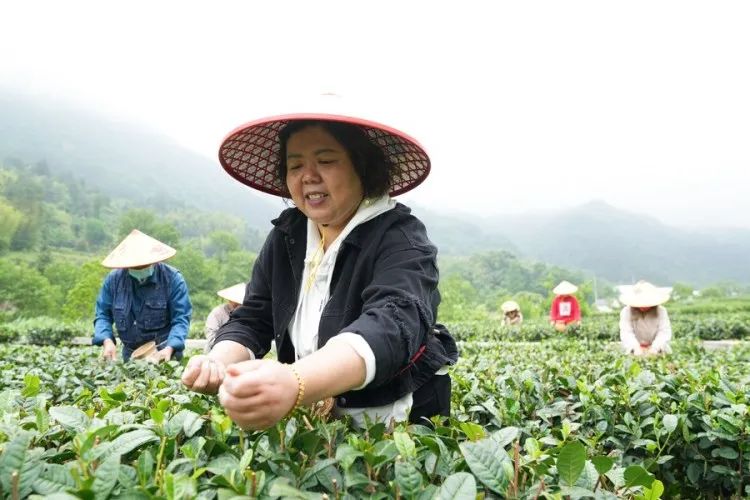
During the previous spring tea harvest season, the green tea from the 220-hectare organic tea garden in Yuexi's Shifo Village snapped up twice the price of ordinary tea leaves.
"The tea industry is the pillar industry that has helped us eliminate poverty and is now helping us achieve prosperity," said Wang Jun, Party secretary of the village.
Thanks to the favorable ecological environment of the nature reserve, the tea produced in Shifo has secured both organic and green certifications and geographical indications, making the tea more profitable.
It also developed ecological tourism based on the tea industry, attracting tens of thousands of tourists each year.
In 2021, Shifo Village's average household income from tea harvest exceeded 30,000 yuan (about 4,483 U.S. dollars) and the village's collective economic income reached nearly 500,000 yuan.
In recent years, counties located in the Dabie Mountains including Yuexi, Huoshan and Jinzhai have successively become the practice and innovation base for the "two mountains" concept, according to which "lucid waters and lush mountains are invaluable assets."
Guided by this concept, different areas in the Dabie Mountains are exploring the new path of green development based on their local realities.
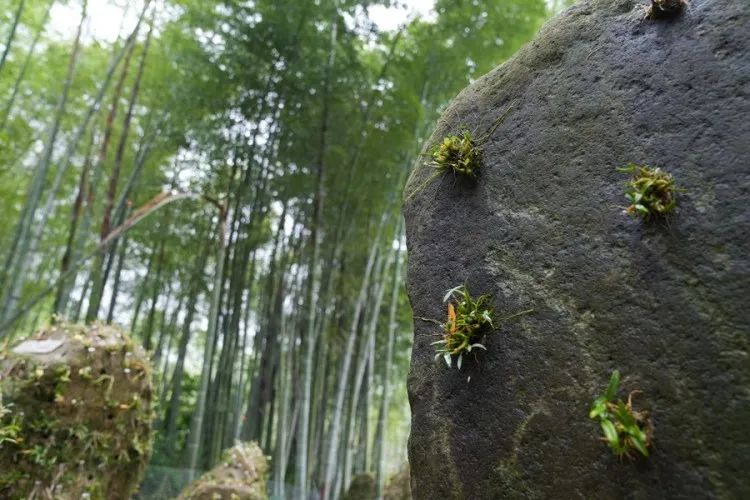
In Sanhe Village of Huoshan County, an important dendrobium production area, a young man named Liu Bo has established a cultivation base of this Chinese herbal medicine and growing it in isolated stone areas.
Currently, each dendrobium is sold for 200 yuan, which means a large stone with some 100 dendrobiums is worth about 20,000 yuan.
"Chinese herbal medicines, including dendrobiums, have high environmental requirements for growth. As a result of Huoshan's improving ecological environment, those stones that were once discarded have become a source of income," Liu said.
In recent years, people in the Dabie Mountains have continued to transform ecological resources into wealth. In 2021, the output value of green agriculture in Yuexi County alone reached 3.36 billion yuan, and the comprehensive tourism revenue totaled over 6 billion yuan, up 4.9 percent and 25 percent year on year, respectively.
ECOLOGICAL COMPENSATION FUND
As an important ecological barrier and water conservation area in Anhui Province, the Dabie Mountains with several large reservoirs is also the source of water for some cities of this province.
Every year, Meishan and Xianghongdian reservoirs alone can provide no less than 320 million cubic meters of water to the downstream cities of Lu'an and Hefei.
In order to boost the enthusiasm for protecting and improving water quality in the upstream areas, Anhui has explored the establishment of an ecological compensation mechanism in the Dabie Mountains since 2014.
Under this mechanism, counties including Jinzhai, Huoshan and other upstream water sources are eligible for compensation funds once their water protection reaches the required standard.
As of now, Jinzhai County, for example, has received nearly 300 million yuan of ecological compensation funds.
In addition to exploring the value of green resources through ecological compensation, regions in the Dabie Mountains have also constantly expanded the industrial chain and value chain of ecological products.
Relying on the high-quality water resource of Foziling Reservoir, Huoshan County has strived to build a beverage and brewing industry in recent years, and the output value of the beverage industry has increased from 3.4 billion yuan in 2018 to 5 billion yuan in 2021.
"In recent years, the demand for good water has exceeded the supply. The water here is turning into gold," said Zhu Songru, head of the county's ecological environment bureau.
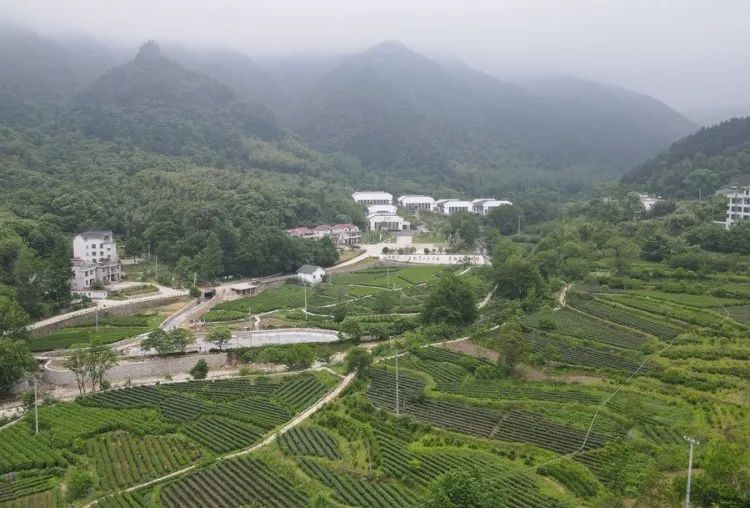
To further utilize ecological resources and discover their value, regions in the Dabie Mountains actively completed the evaluation of their gross ecosystem product (GEP), which can provide an indicator for further digging the market value of ecological products and promoting the capitalization of ecological resources.
Yuexi County in Anhui Province completed its GEP evaluation at the end of 2021 and figured out a clear picture of the county's ecological resources and value. Starting this year, Huoshan County, Jinzhai County and other places have also completed their GEP evaluation one after another.
On this basis, regions in the Dabie Mountains are building a platform for the utilization and management of ecological resources, on which the management rights of ecological resources such as water, forest and negative oxygen ions have become products and can be traded through projects.
"Realizing the 'two mountains' concept needs a fundamental change in development mode, which includes the change of development elements and evaluation system," said He Bin, chief of Yuexi County.
(Reporting by Yang Yuhua, Wang Haiyue, Yue Yuanyuan, Shui Jinchen, Wu Huijun; Video reporters: Yu Qihan, Du Yu, Shui Jinchen; Video editors: Ma Ruxuan, Zhu Jianhui, Ming Dajun)
翻译大意
译者/唐洪全
近年来,安徽省岳西、霍山、金寨等大别山县区在“两山”理念,即“绿水青山就是金山银山”这一理念的指引下,相继成为“一带一路”建设的实践创新基地。大别山各地区结合本地实际,探索绿色发展新道路。
今年5月,在岳西县深山里住了大半辈子的护林员张泽仁,收到了搬离深山的通知。虽然有些不舍,但他仍然签字同意。这里将建设生物多样性保护中心,并在保护中心的基础上发展高端生态健康产业。
“利用绿色资源,同时保护它们,而不是让它们隐藏在深山是一个很好的方法,”张泽译说。
位于大别山区的岳西县,是中国历史上最贫困的地区之一,也是摆脱贫困后探索利用绿色资源发展经济建设脱贫的代表。
绿色是黄金
在之前的春茶收获季节,岳西石佛村 220 公顷有机茶园的绿茶以普通茶叶两倍的价格被抢购一空。
该村党支部书记王军说:“茶叶产业是帮助我们脱贫致富的支柱产业。”
得益于自然保护区良好的生态环境,石佛村生产的茶叶获得了有机认证、绿色认证和地理标志认证,因此增加了茶叶的收益。石佛村还发展了以茶产业为基础的生态旅游,每年吸引游客数以万计。
2021 年,石佛村平均每户茶叶收入超过 3 万元,村集体经济收入近 50万元。
近年来,大别山区岳西、霍山、金寨等县相继成为“两山”理念的实践创新基地。在这一理念的指引下,大别山各地区结合本地实际,探索绿色发展新路径。
在石斛重要产区霍山县三合村,一位名叫刘波的年轻人建立了这种中草药的种植基地。目前,每棵石斛的售价为 200 元,也就是说,一颗大石头上 100 棵石斛的价值约为 2 万元。
“包括石斛属在内的中草药对生长的环境要求很高。由于霍山生态环境的改善,那些曾经被丢弃的石头变成了收入来源。”刘波说。
近年来,大别山区人民不断将生态资源转化为财富。2021 年,岳西县绿色农业产值达到33.6亿元,旅游综合收入超过 60 亿元,同比分别增长4.9%和 25 %。
生态补偿基金
大别山是安徽省重要的生态屏障和水源涵养区,拥有多座大型水库,也是安徽省部分城市的水源地。
每年,仅梅山水库和向洪店水库就可向下游的六安市和合肥市提供不少于3.2亿立方米的水。
为提升上游地区保护和改善水质的积极性, 2014 年起,安徽探索建立大别山生态补偿机制。在这一机制下,包括金寨、霍山等上游水源地的县,一旦其水源保护达到规定标准,就有资格获得补偿资金。截至目前,以金寨县为例,已收到近 3 亿元的生态补偿资金。
除了通过生态补偿发掘绿色资源的价值,大别山地区还不断拓展生态产品的产业链和价值链。
霍山县依托佛子岭水库优质水资源,近年来着力打造饮料酿造产业,饮料产业产值从 2018 年的 34 亿元增加到 2021 年的 50 亿元。
“近年来,优质水的需求已超过供应。这里的水正在变成“金子”县生态环境分局局长朱松如说。
为进一步开发利用生态资源,发掘其价值,大别山区积极开展生态系统总产值( GEP )评估工作,为下一步挖掘生态产品市场价值、促进生态资源资产业化提供了基础。
安徽省岳西县于 2021 年底完成了 GEP 评估,对该县的生态资源和价值有了清晰的认识。今年开始,霍山县、金寨县等地也陆续完成了各自的 GEP 评估。
在此基础上,大别山区的“两山”实践创新基地还积极搭建生态资源运营管理平台,把碧水、森林、负氧离子等生态资源作为生产核心要素,可以通过项目进行交易。
岳西县县长何斌说:“要贯彻‘两山’理念,需要从根本上转变发展方式,这意味着发展要素、考核体系等深层变化。”
原标题:《新华社向世界介绍安徽“两山论”实践经验》